

Winning Team LUZify
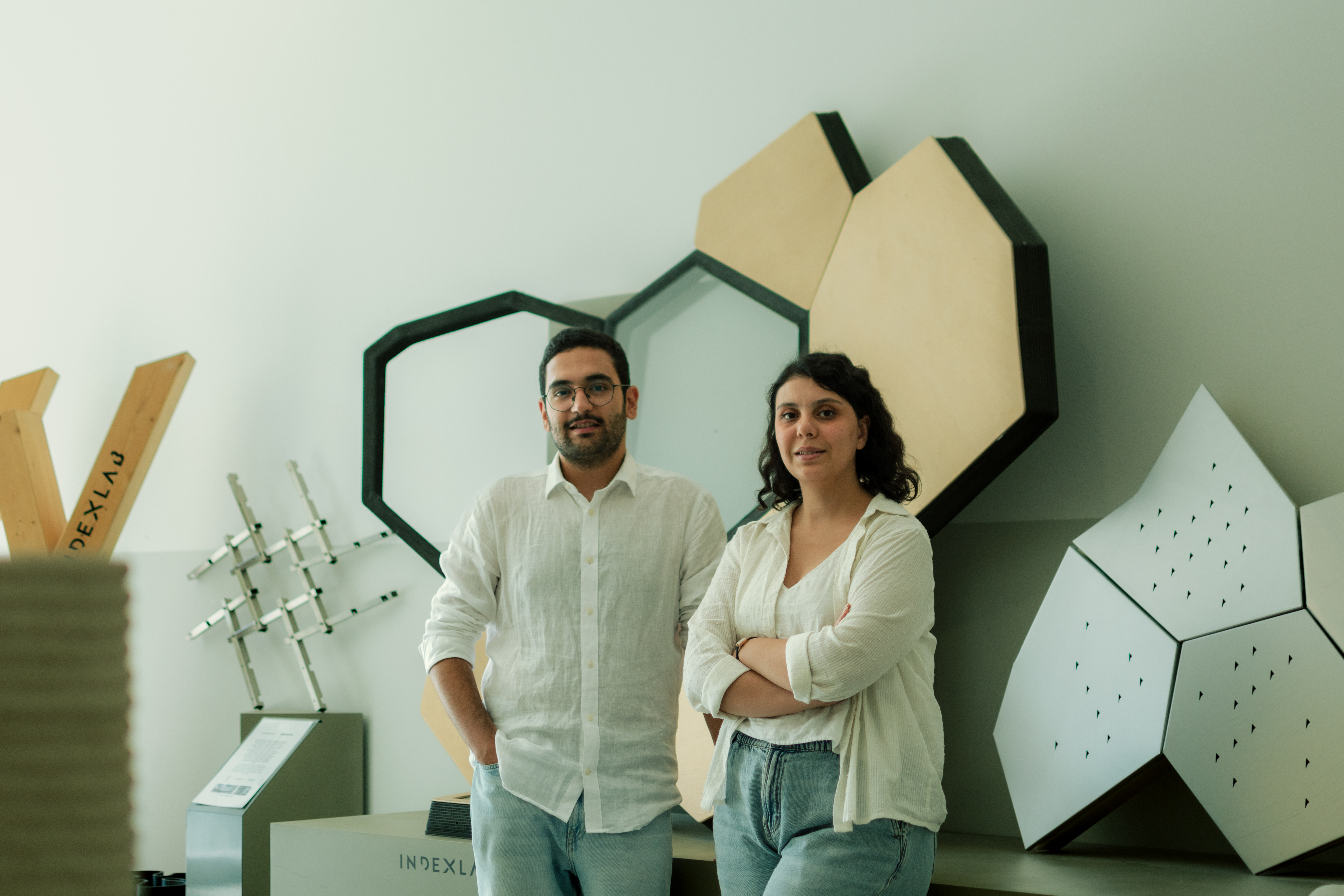
With members Ali Lari Siahkali, Hengameh Zandsarabi
Project Overview Living The Landscape
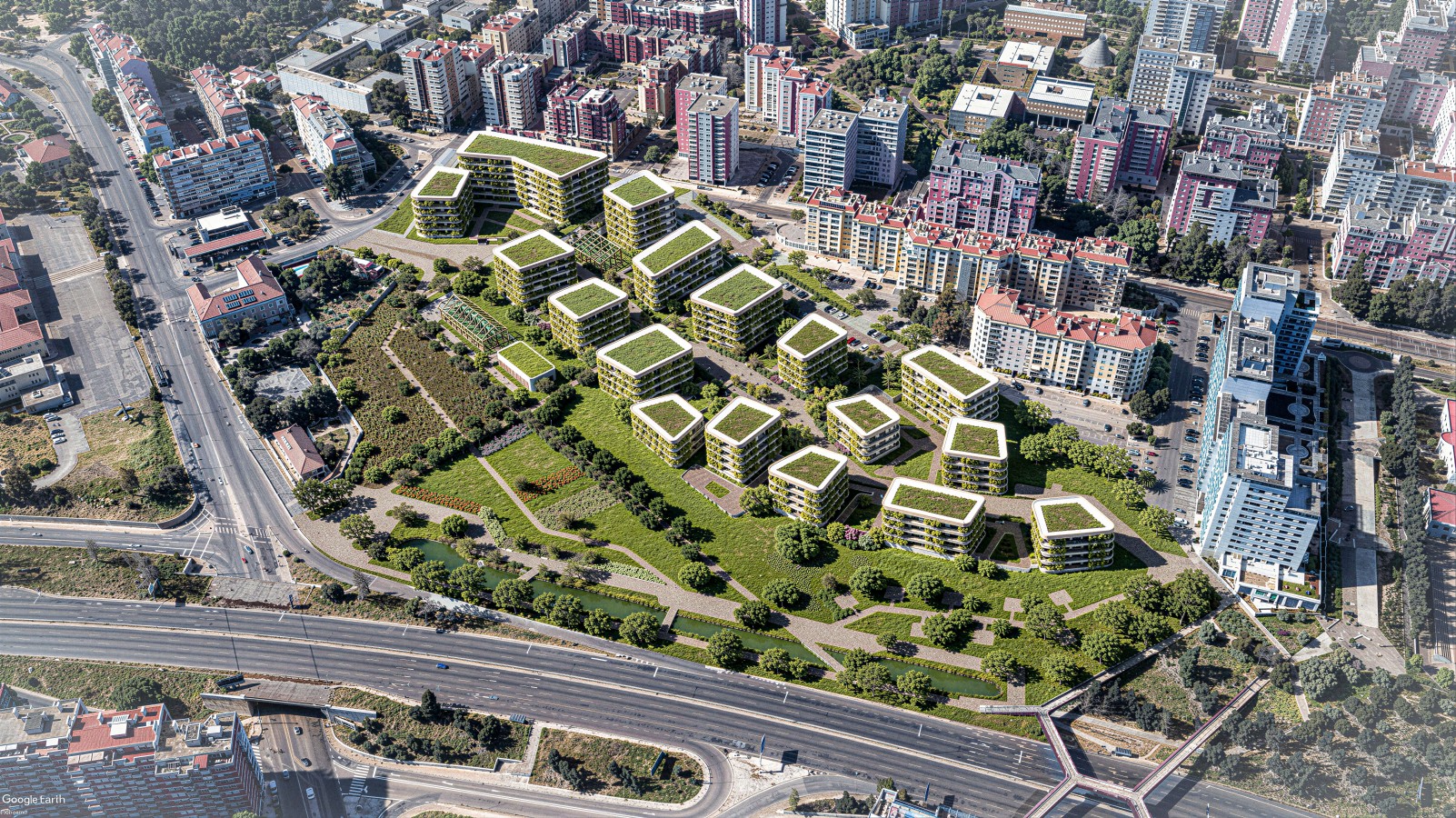
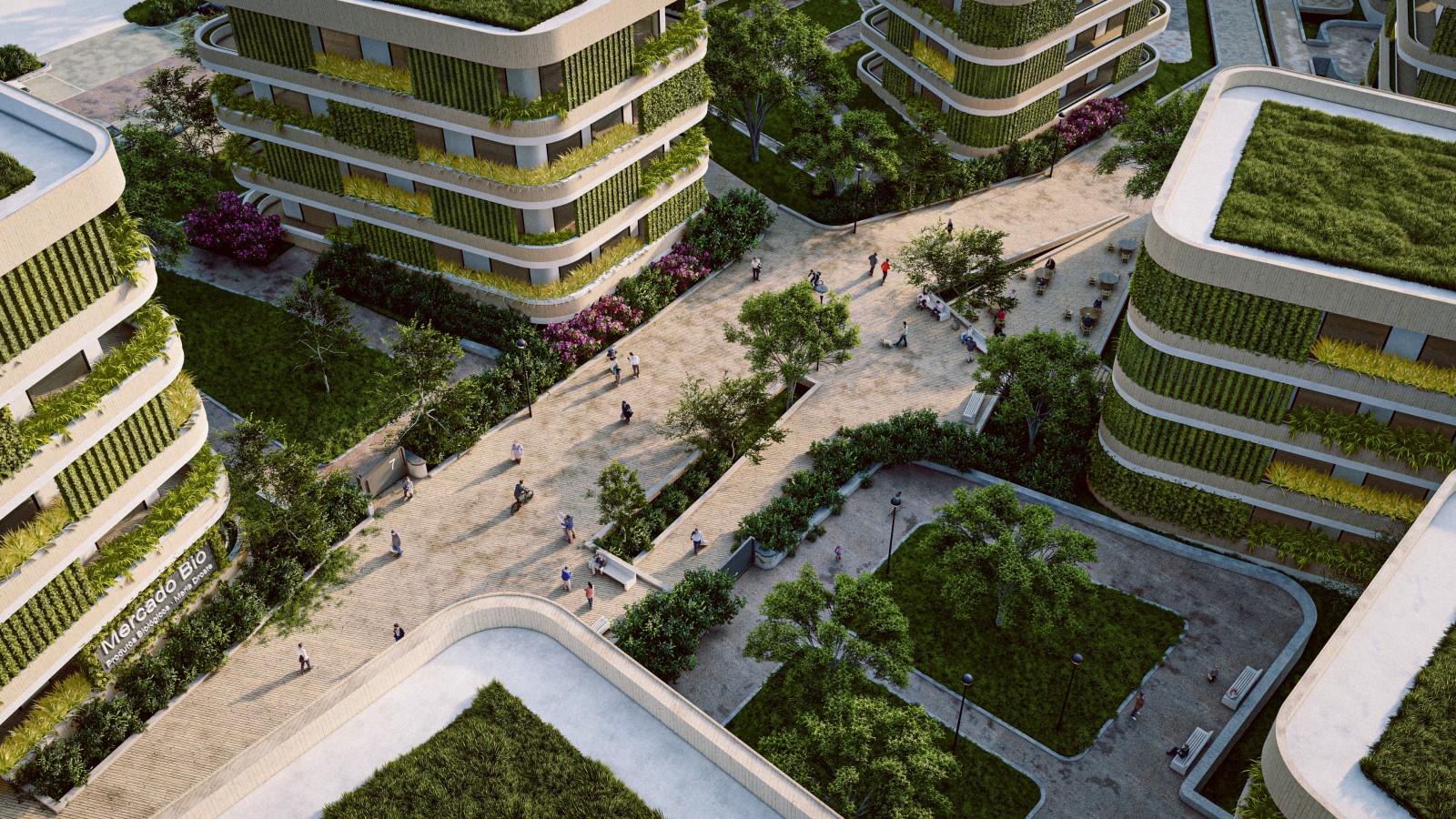
The winning project, Living The Landscape, reimagines the Maria Droste site in northern Lisbon as a resilient, regenerative eco-village seamlessly integrated into the city’s broader green network. Inspired by the spatial and social dynamics of traditional village life, the core concept centers on allowing the site's natural topography, vegetation, and hydrology to dictate the neighborhood's layout rather than imposing rigid urban blocks. Buildings are arranged in small, clustered residential units surrounded by a continuous green framework featuring active public spaces, productive urban gardens, and blue-green infrastructure designed to foster a slower, healthier, and community-focused lifestyle.
The strength of the project lies in its holistic, landscape-led approach that balances social inclusivity, environmental resilience, and climate adaptation. Key features include decentralized water-sensitive strategies - such as seasonal retention ponds and bioswales modeled on surface runoff simulations - that enhance stormwater management and local cooling. The proposal prioritizes low-carbon mobility with a car-free layout, lightweight elevated pedestrian trails, and activated transit connections. The integration of hybrid housing, smart greenhouses, circular composting systems, and intergenerational community hubs ensures long-term social cohesion, local resource efficiency, and alignment with sustainable urban design goals.
Check out the documentation tab to view the winning team's proposal!
Honorable mentions
GRID/GRID with members Tudor-Ioan Prelipcean, Rodrigo Miguel Borges Teodosio Camilo
Nudeltopf Kollektiv with members Lioba Paulina Becker, Vincent Scheffler, Johan Loy, Konstantin Mielke
Congratulations to all participating teams! Thank you for bringing your bold visions to this site challenge.
The Site
Located in the parish of Carnide, bordering Lumiar and São Domingos de Benfica, the Maria Droste site sits at the heart of Lisbon’s northern urban crown, linking housing districts with the city’s ecological network.
The City of Lisbon invites innovative design ideas that promote climate resilience, inclusion, and sustainable mobility. Proposals should explore how housing, ecology, and public space can coexist in a climate-positive urban model.
Covering approximately 62,500 m², the site combines municipal, state, and private lands, including built areas and open spaces. According to the Lisbon Municipal Master Plan (PDM), it is a transitional zone with residential, green, and recreational areas, acting as a hinge between urban and ecological systems.
Historically, the area has been studied through the Maria Droste Detailed Plan (2006) and the Maria Droste Urban Park Study (2011), both envisioning its transformation into a structuring urban park connecting Carnide, Lumiar, and Luz.

Site background
According to the Lisbon Municipal Master Plan (PDM), the Maria Droste area is a transitional zone linking consolidated housing districts with the city’s ecological structure.It includes central and residential areas to be consolidated, green and recreational zones, and landscape buffers along infrastructures — reflecting its hybrid urban–ecological nature and its potential to become a key hinge within Lisbon’s network of structural green corridors.
Historically, the area has been addressed through the Maria Droste Detailed Plan (2006) and the Maria Droste Urban Park Study (2011, Falcão de Campos), both envisioning the transformation of this underused space into a structuring urban park linking Carnide, Lumiar, and Luz.
Approx. site area
The site area is approximately 62,500 m² and includes a mix of public and private land.Key information
The Maria Droste site connects consolidated housing areas with Lisbon’s ecological network and green corridors. It includes both built areas and open green spaces with strong potential for sustainable transformation.Related


Documentation
discover the winning project
[EN] Lisbon Site Form - Students Reinventing Cities
[EN] Competition Regulations 2025-26_Students Reinventing Cities
[EN] Guidance to Design a Green and Thriving Neighbourhood
[EN] Team Form for Registration (Phase 1) - Students Reinventing Cities 2025-26
[PT] Lisboa Site Form - Students Reinventing Cities
[PT] Competition Regulations 2025-26_Students Reinventing Cities
[PT] Guidance to Design a Green and Thriving Neighbourhood
[PT] Team Form for Project Submission (Phase 1) - Students Reinventing Cities 2025
Dataroom Access
Download specific documents for this site
Click to access
Keep me posted!
Questions?
If you have a question or would like more details on the site and the Students Reinventing Cities competition, please use the form below. You will receive a response via email.
Location
