



Winning Team Earth
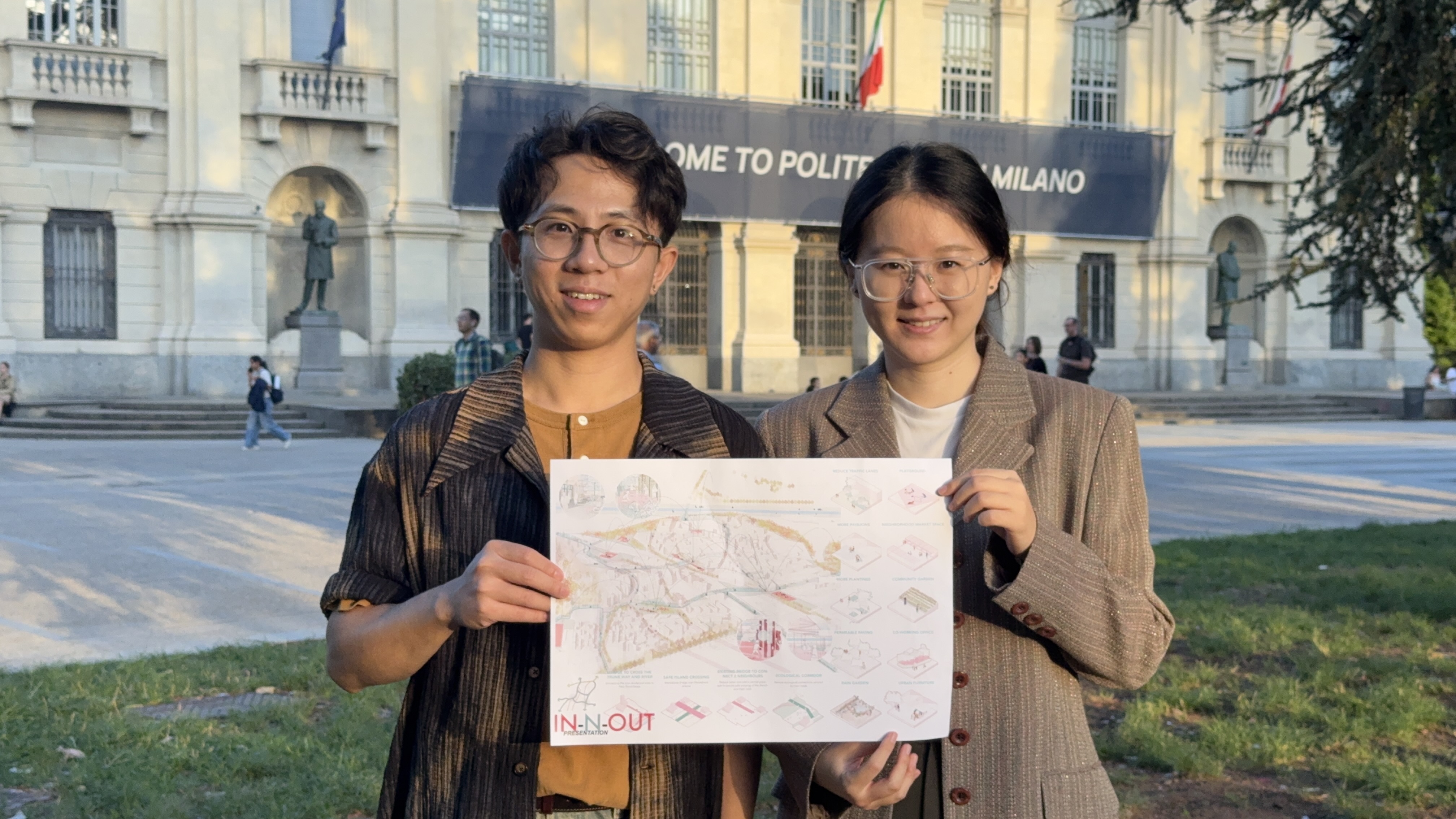
Members: Zhaotao Mai, Yingxue Xiao | Politecnico di Milano (Italy)
Project Overview In-N-Out
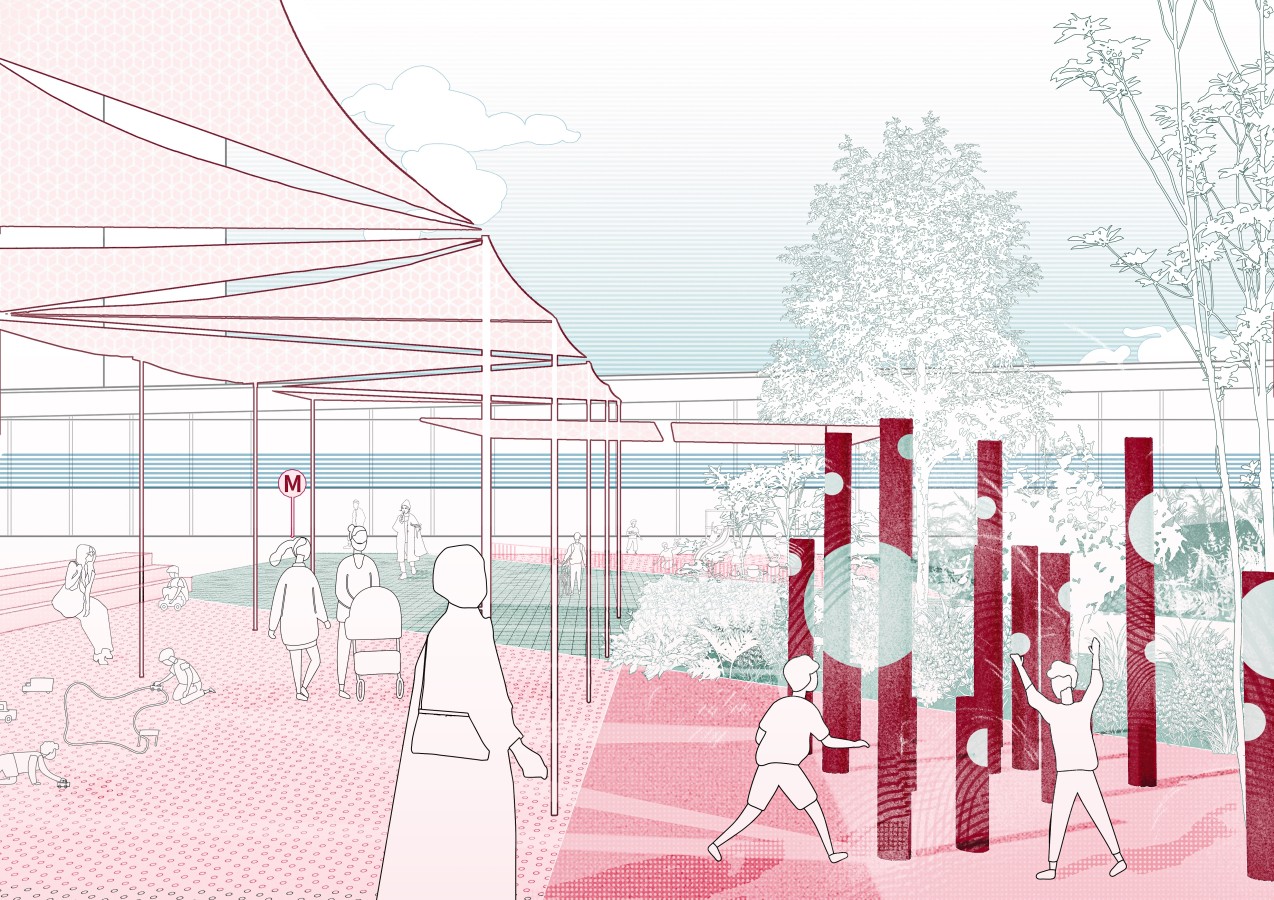
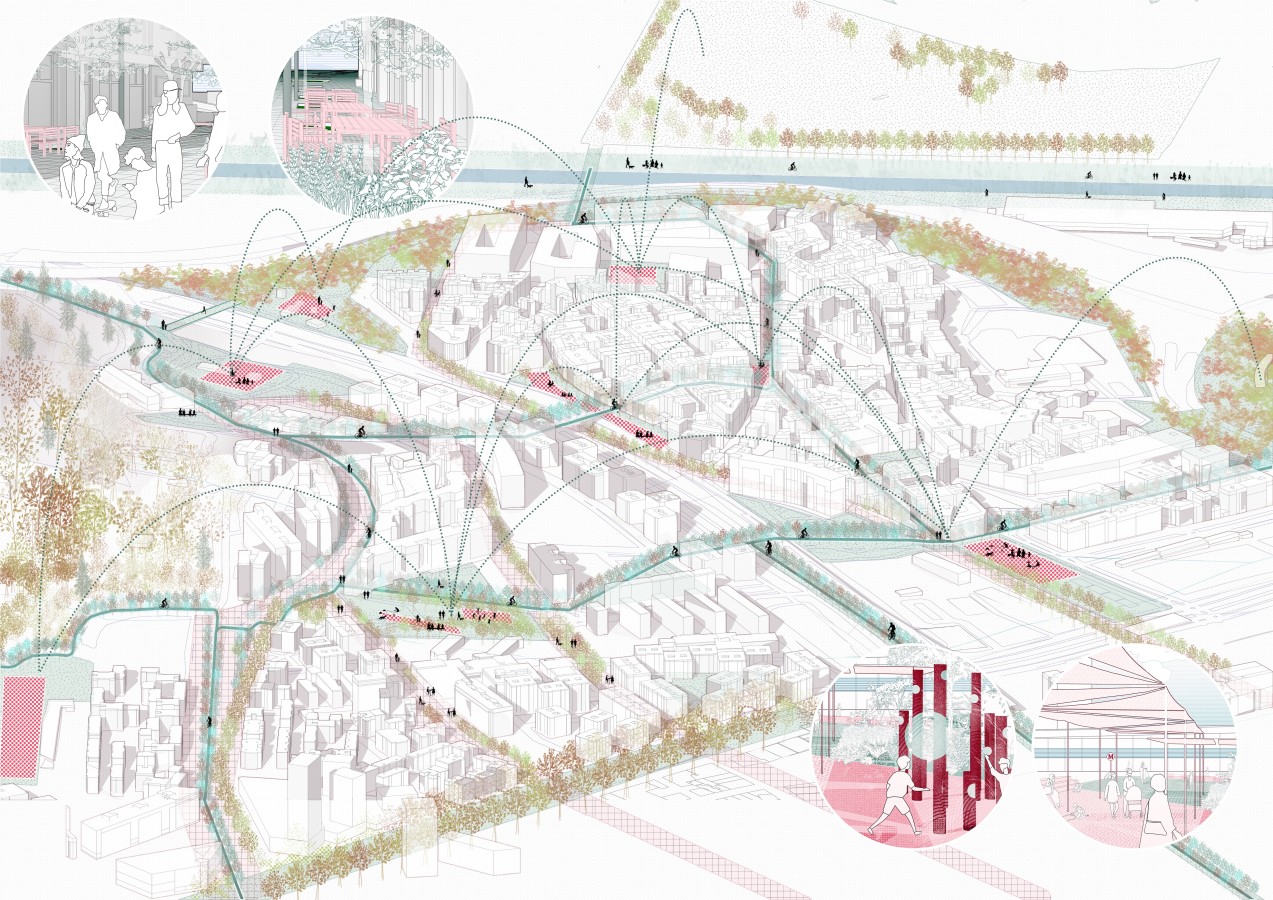
IN-N-OUT reconnects three northern neighbourhoods - Trinitat Nova, Trinitat Vella, and Baró de Viver - to Parc Natural de Collserola and Parc Fluvial del Besòs, cut off for years by transport infrastructure. The plan redirects through-traffic, builds continuous cycling and pedestrian networks, and adds safer crossings across the major avenues that currently divide the area. In addition, the proposal reimagines underutilized public spaces and streetscapes into green, permeable, and climate-resilient environments that offer vital social refuges and recreational areas for residents.
Quantifiable outcomes include increased permeable paving, expanded tree canopy, additional shaded public space, and reduced stormwater runoff. The proposal's socio-economic dimension is equally significant: vacant ground-floor premises are converted into municipal co-working spaces under a "social giveback" model, intended to attract younger residents and economic activity to ageing neighbourhoods.
Check out the documentation tab to view the winning team's proposal!
Honorable mentions
- Forma 3 with members Jose Daniel Segura Viquez, Elif Sude Askin, Daniel Hernandez Martinez
- Reanimate with members Maria Esteban, Lucia Alarcon, Mohammad Ehsan Vazirizadeh
Congratulations to all participating teams! Thank you for bringing your bold visions to this site challenge.
The Site
Trinitat Nova is a neighborhood in Barcelona's Nou Barris district, situated between the Collserola mountain range and the Besòs River. With a population of over 20,000 inhabitants, this area is characterized by scattered residential blocks surrounded by abundant yet underutilized green spaces. The neighborhood faces significant challenges related to urban fragmentation caused by large road infrastructures, including the Ronda de Dalt highway, which has historically severed connections between the community and its natural surroundings.
The area presents unique opportunities for urban regeneration through two ongoing projects: the ReGreeneration Project Trinitat Nova, which transforms 8,640 m² of urban space including 2,493 m² of new green areas, and the Trinitat Vella Prison redevelopment, which will create 129 new homes and establish crucial connections through new green corridors. These initiatives aim to strengthen both internal neighborhood connectivity and external links to the mountain and river, creating a more cohesive urban environment.
Trinitat Nova boasts strong social diversity and significant potential for transformation. The challenge lies in converting residual green spaces into an activated, structured green network that serves the community while improving accessibility and creating new public spaces that integrate mobility, ecology, and social activities.

Approx. site area
Study Area: 332 ha encompassing Trinitat Nova and Vella, La Prosperitat, Sant Andreu del Palomar, and adjacent areas
Project intervention area: 95 hectares focusing on the core neighbourhood transformation zones
Key Information
Neighborhood Population: 20,659 inhabitants
Population density: 10,027 inhabitants/km² (lower than Barcelona's 16,630 inhabitants/km²)
Social composition: 22.42% foreign-born population, reflecting Barcelona's multicultural character
Ongoing regeneration: Two major projects (ReGreeneration Trinitat Nova and Trinitat Vella Prison redevelopment) already underway
Urban context: Located between Collserola mountain and Besòs River, with significant infrastructure barriers
Concept of the 15-minute city: integrating pedestrian and cycling-friendly designs into the neighborhoods.

Download specific documents for this site
Keep me posted!
Questions?
If you have a question or would like more details on the site and the Students Reinventing Cities competition, please use the form below. You will receive a response via email.
