

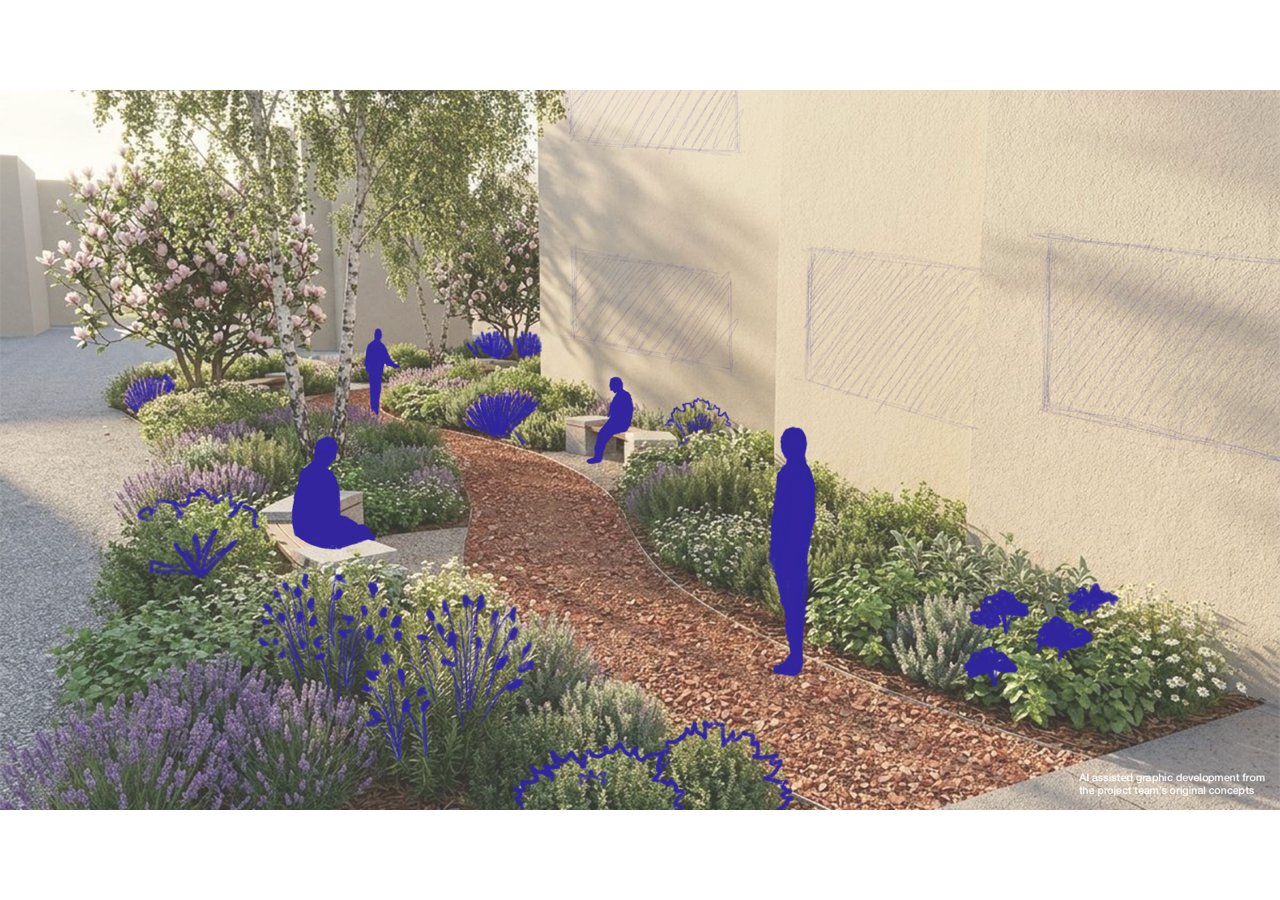


Winning Team URBAN ROOTS
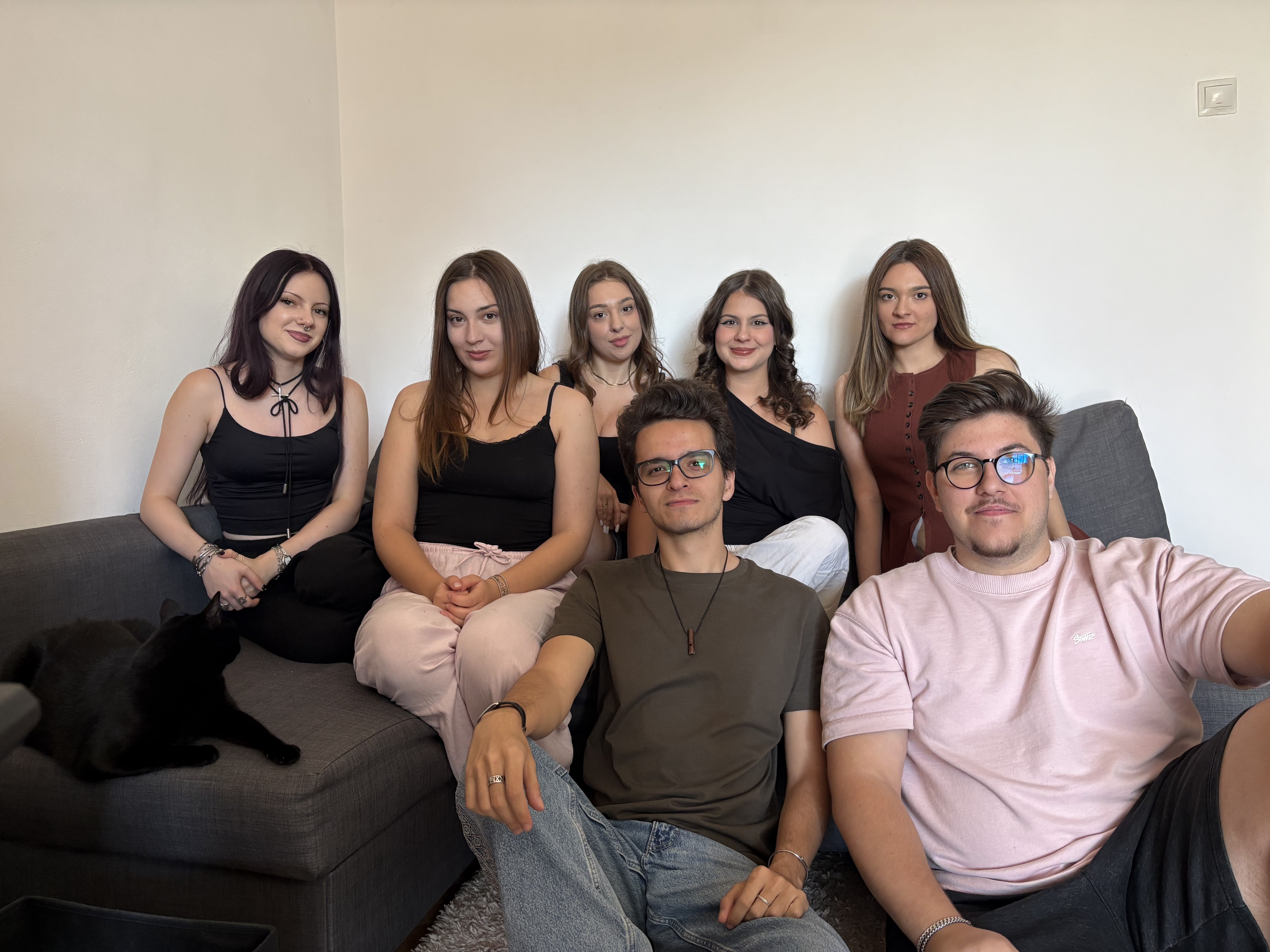
Members: Daria Ciobanu, Bianca-Alexandra Stoean, Cătălina Ioana Bratu, Mihnea Vladu, Andra-Georgiana Ciucanu, Laura-Florentina Grigoraș, Andrei-Alexandru Ridichie
Proposal Overview Identity Nodes
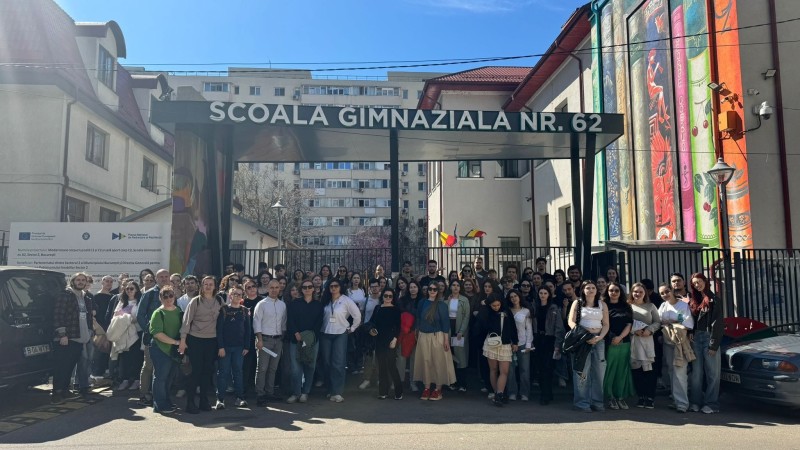
Identity Nodes reactivates the residual inter-block spaces characteristic of Bucharest's Pantelimon-Fundeni neighbourhood, introducing a sequence of thematic public spaces — permaculture areas, pet-friendly pathways, board-game spaces, therapeutic gardens, and rain gardens — along the pedestrian route connecting School No. 62 to Kindergarten No. 280.
The design minimises resource input by reusing excavated soil for green mounds and pruned wood for stepping discs, and by linking the school's composting and permaculture systems to a local church's social canteen in support of vulnerable residents. As each intervention is modular and non-permanent, the project operates within existing Romanian urban regulations without requiring building permits, offering a replicable model for post-socialist housing complexes more broadly.
Check out the documentation tab to view the winning team's proposal!
Honorable mentions
- AMA23 with members Angelica-Enia Stoica, Miruna Ana Rotar, Andreea Elena Voinea, Anca Roxana Strugariu
- Common Ground with members Sabin Alexandru, Alexandra-Maria Mareș, Ioana-Cristina Pleșca, Ana Maria Silescu, Bianca Stan
For a city, working directly with young people on a real site is very different from simply asking them what they think about the future. Here, they were given a real challenge and the opportunity to develop real solutions. At the same time city officials had the chance to see the neighbourhood through a different lens - Rareș Hopincă, Mayor of Bucharest’s 2nd District
Congratulations to all participating teams! Thank you for bringing your bold visions to this site challenge.
The Site
The Pantelimon-Fundeni neighborhood in District 2 is characterized by dense, 10-storey collective housing blocks built between 1974 and 1979 as factory housing. The area hosts approximately 5,000 residents in a socially and culturally diverse community including elderly owners, young families, refugees, and ethnic minorities. Originally, semi-public courtyards were maintained by cohesive, community-driven residents, but privatization and tenant turnover have weakened social bonds while much of the open land has been converted into parking lots.
The demonstration site covers 14,000 m² within a broader 54,000 m² network of green spaces, contributing to a 25% increase in District 2's public green surface. Located between Pantelimon Avenue and Fundeni Avenue, the area benefits from good public transport access and proximity to a school, kindergarten, and a parish operating a social canteen for vulnerable groups. Despite this rich social infrastructure, environmental challenges such as poor air quality, urban heat stress, compacted soils, and fragmented public spaces significantly impact quality of life.
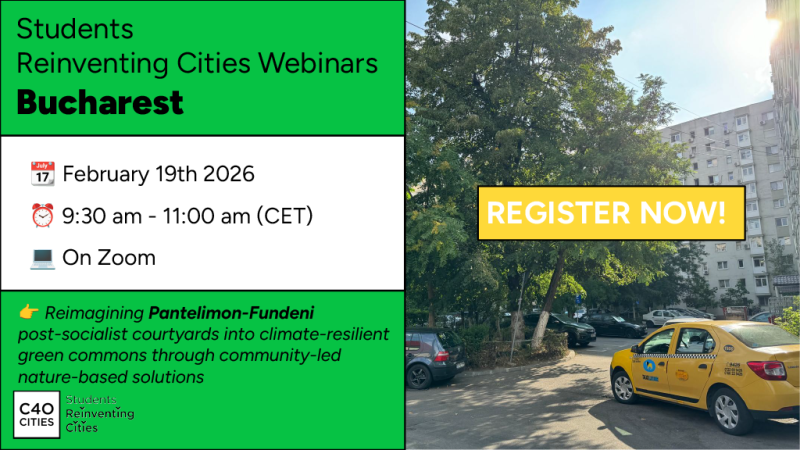
Through the ReGreeneration project - an EU Horizon Europe initiative - District 2 City Hall aims to transform this "dormitory neighborhood" into a co-created urban ecosystem. The project prioritizes nature-based solutions including rain gardens, raised-bed community gardens, and small-scale composting installations, designed as community-managed green commons. These interventions will serve as inclusive spaces fostering environmental stewardship, climate education, and social cohesion, establishing a replicable model for post-socialist urban regeneration across European cities.

Approx. site area
Demonstration area: 14,000 m² within a broader 54,000 m² green space network
Total investment for Lots 1-3: approximately €700,000
Key Information
Population: Approximately 5,000 residents in 10-storey collective housing blocks
Urban context: Post-socialist residential district (built 1974-1979) in District 2
Social infrastructure: School, kindergarten, parish social canteen serving vulnerable groups
Planning designation: Collective housing zone (M1) under Bucharest's General Urban Plan
Project framework: EU Horizon Europe ReGreeneration pilot led by District 2 City Hall

Download specific documents for this site
Keep me posted!
Questions?
If you have a question or would like more details on the site and the Students Reinventing Cities competition, please use the form below. You will receive a response via email.
