

Winning Team Mustapha Adeniyi Giwa Foundation
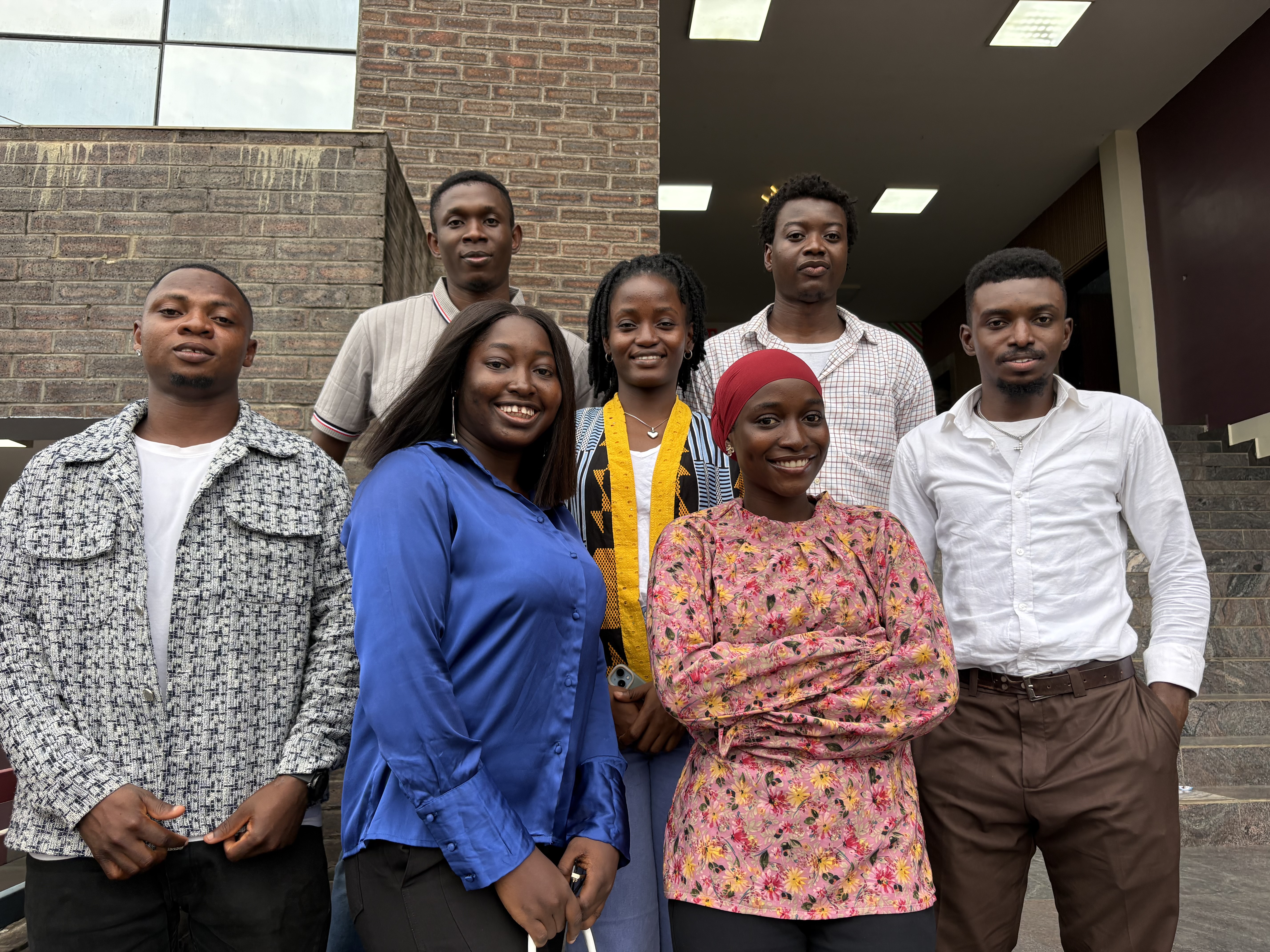
Members: Razzak Adebayo, Bukola Oshinfowokan, Esther Kolawole, Salihu Abdullahi, Hezron Ijuo, Oluwanifesimi Ojediran, Hakeemat Olajobi, Bashir Alabi, Michael Oyeneye, Raheem Sodiq, Aruna Afeez, Bello Akeem, Abubakar Farouk Francis
Project overview The Circular Sponge School
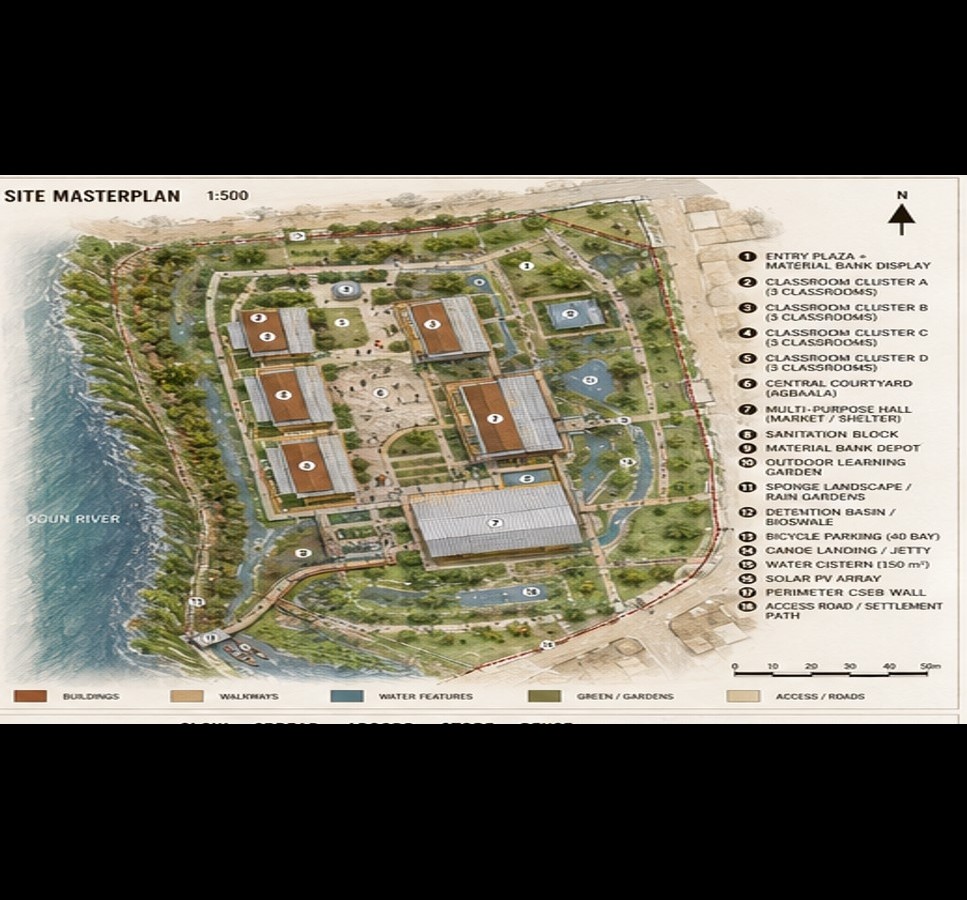
The Circular Sponge School proposes a dual-use facility for Itowolo Community Primary School in Ikorodu, functioning as an educational space that converts into an emergency shelter, food distribution site, and medical post during flood events along the Ogun River. The design comprises five spatial components: a bioengineered Living Levee, a Sponge Landscape for water absorption, elevated compressed stabilised earth block classrooms, a multi-purpose market and shelter hall, and flood-proof composting sanitation systems.
Check out the documentation tab to view the winning team's proposal!
Honorable Mentions
Nyakatsi Collective with members Elna Haguma, Tess Mirenge, Mia Karimba, Ela Kanakuze Karitanyi, Janice Muregi, Joanna Munei Waliuba
Scarlet Sunset with members Stephanie Edwina, Fatinnuha Auni Naurassani, Jillan Sausan Amira, Dian Nafiatul Awaliyah, Gusti ayu Kavitha Padmadewi
Congratulations to all participating teams! Thank you for bringing your bold visions to this site challenge.
The Site
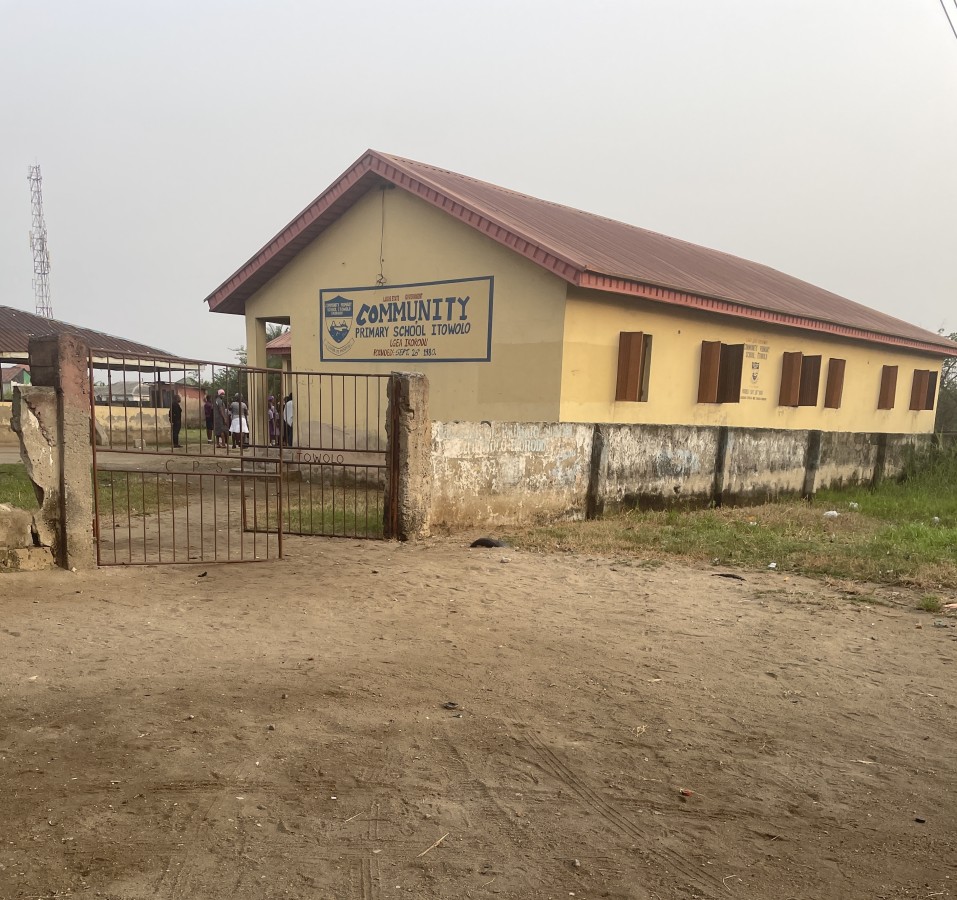
The Community Primary School in Itowolo is located in a small riverine settlement within Greater Ikorodu, Lagos State. Historically an artisanal fishing village shaped by seasonal wetlands, Itowolo remains closely tied to its natural environment while facing growing pressures linked to rapid urbanisation and environmental vulnerability. The school, established in the 1980s, is a critical learning space for local children but is increasingly threatened by recurring flooding, deteriorated infrastructure, and unsafe site conditions.
The surrounding Ajegunle–Ikorodu corridor is densely populated, while Itowolo itself is a tightly clustered riverside community with predominantly low-income households relying on fishing, petty trading, and informal livelihoods. Limited public services, irregular drainage, and recurrent inundation disrupt daily life. Floodwater entering the school grounds, the collapse of the perimeter fence, and failing sanitation facilities underscore the urgent need for resilient, community-serving interventions.
Approx. Site Area
36,792 m²
Key Information
- Riverine settlement highly exposed to seasonal flooding
- Collapsed perimeter boundary leading to unsafe and unsanitary conditions
- Deteriorated sanitation facilities and unmanaged waste contributing to health risks
- Critical need for resilient, nature-based solutions to protect learning spaces
- Opportunity to transform the school into a safe, accessible, climate-resilient hub for children and the wider community.


Download specific documents for this site
Keep me posted!
Questions?
If you have a question or would like more details on the site and the Students Reinventing Cities competition, please use the form below. You will receive a response via email.
