


Winning team: Eco Queens
Team members: Svenja Schröder, Margherita Sciullo, Paula Lohse, Oleksandra Shurman, Elisa Straubinger & Amaneh Ekrasardashti | Malmö University
The winning project transforms Vasbyhave into a park that meets diverse community needs by designing spaces that encourage physical activity, mental well-being, and social interaction, such as multi-use sports areas, serene retreats, and communal spaces.
Team Eco Queens explains that “The most rewarding part of participating in this competition has been the opportunity to learn from each other's diverse backgrounds and leverage our unique skills effectively. As a team of students from various disciplines, we combined different perspectives, enriching our approach to urban planning. This experience allowed us to apply our theoretical knowledge in a practical, impactful way, translating concepts into a feasible design for Vasbyhave. Contributing innovative ideas to the city's future planning has been incredibly fulfilling, reaffirming the value of collaboration and interdisciplinary thinking in creating sustainable and inclusive urban spaces.”
The team was selected as the winner of the competition due to their effective integration of research into their design, clearly linking the research to their proposed concept. Their design demonstrates a strong interplay between the conceptual framework and its specific design while showcasing a solid understanding of the local context. Additionally, the proposal offers a diverse range of uses, ensuring the design is both functional and adaptable to the needs of intergenerational user groups. The proposal reflects a thoughtful approach and a comprehensive understanding of both theoretical and practical aspects.

The jurors congratulate all participating teams, noting that all teams demonstrated a strong understanding of the task, showcasing their dedication and effort. Many proposals excelled in conceptual development, though there is room for improvement in integrating their concepts with the design more closely. Strengthening this connection, including incorporating detailed design elements like benches for user comfort, would enhance the success of the projects. Prioritizing specific elements and making intentional design decisions that relates to the concepts could thus generally strengthen the projects. While the students showed strong conceptual skills, addressing these areas could further elevate their designs.

Shane Casey, AJ Carillo, Spencer Wigodsky, Emily Palanjia & Zia Wilson | University of Colorado Boulder
Advisor: Alice Reznickova, Teaching Associate Professor and Capstone Lead

One of the most powerful tools for public health intervention is green, public space. One of the integral green, public spaces in the first area to be developed is Vasbyhave – a one-hectare park in the first phase of the development. The park represents an incredible opportunity to test health interventions at the neighbourhood scale.
Through this competition, we invite you to provide your best ideas on how the park can prevent and promote health for the residents and visitors of the area. We are seeking ideas on how the park can promote healthier living for the diverse groups of people who will be using the park and living in the surrounding area with a special focus on intergenerational uses. Our focus is not only on people but also on the planet, which is why we are also seeking inputs that focus on creating the foundation for promoting planetary health through measures such as climate adaptation and the development of biodiverse ecosystems.
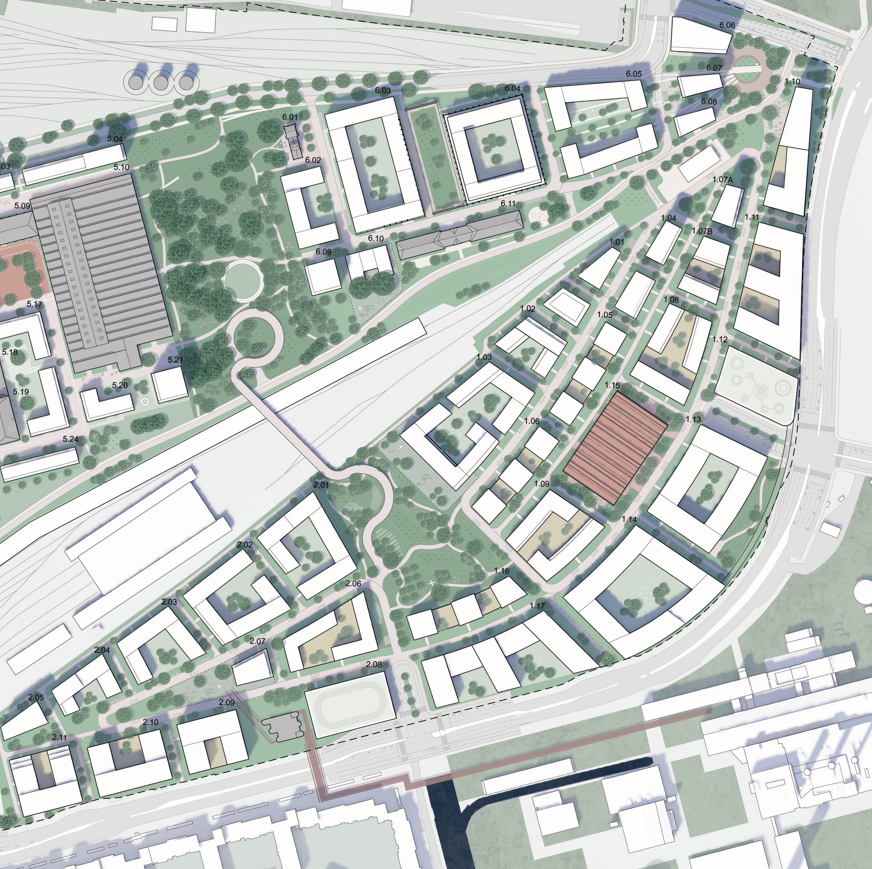
Approx. size of area:
- The park itself is one hectare but is a part of the 9-hectare first phase of the development.
- The park connects to a two-hectare park, Lokomotivskoven, on the other side of a bridge that connects the North and South of the area.
- The park is located within the first phase of the development, a mixed, community-oriented neighbourhood with diverse housing options and integrated education, play, work and healthy food options.
Priority areas & main expectations:
Three specific priorities apply to the design of the park, but overall, it is expected that the park be programmed in a way that promotes the health of both people and the planet.
The design should furthermore focus on the diverse user groups, creating intergenerational meeting points, and enhancing inclusivity. Additionally, the park should boost climate resilience through adaptation measures and biodiversity while also taking its connection to the wider city into account.
The jury panel who evaluated all submitted projects consisted of the following members:
- Jesse Shapins, Urban Planning Lead | Urban Partners
- Kim Illum, Project Developer for Jernbanebyen | DSB Ejendomsudvikling
- Peter Larsson, Project Developer for Jernbanebyen | Freja Ejendomme
- Io Maria Andersen Schønherr, Strategic Urban Lead | COBE Architects (Master Planner of Jernbanebyen)
- Sandra Gonon, Project Developer for Architecture and Urban Planning in Jernbanebyen | City of Copenhagen (Technical & Environment Department)
- Lykke Leonardsen, Head of Program for Resilient and Sustainable City Solutions | City of Copenhagen
- Vivian Monteiro Malta, Green and Thriving Neighbourhoods Project Officer | C40 Cities


Download specific documents for this site
Keep me posted!
Questions?
If you have a question or would like more details on the site and the Students Reinventing Cities competition, please use the form below. You will receive a response via email.
