
Howe Street Market Corridor
Freetown, Sierra Leone
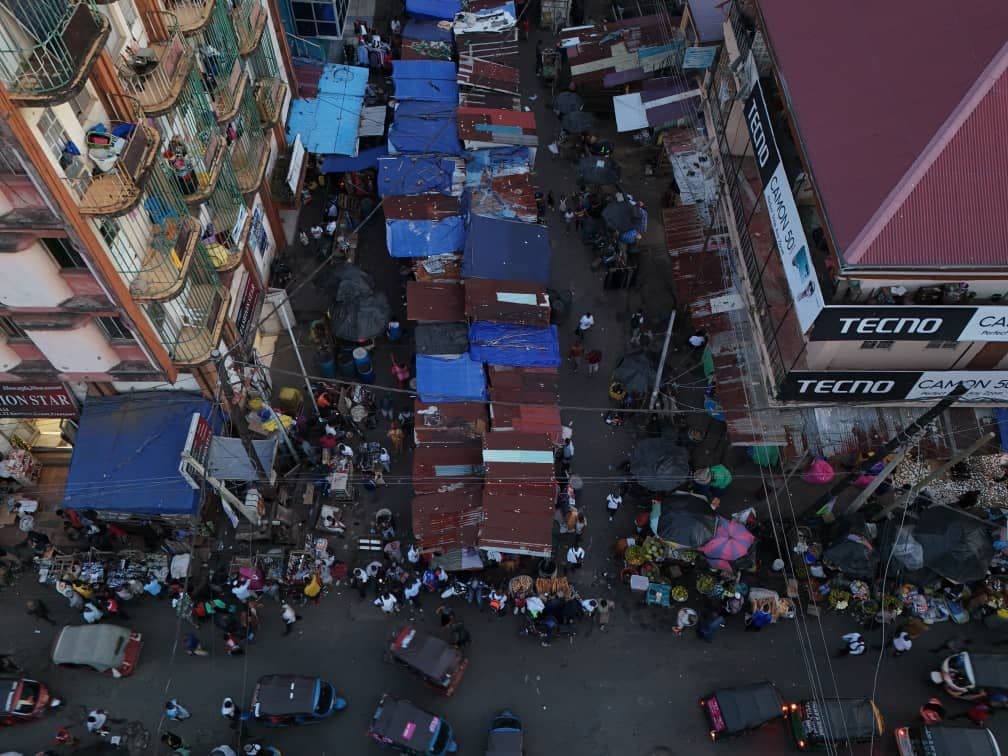
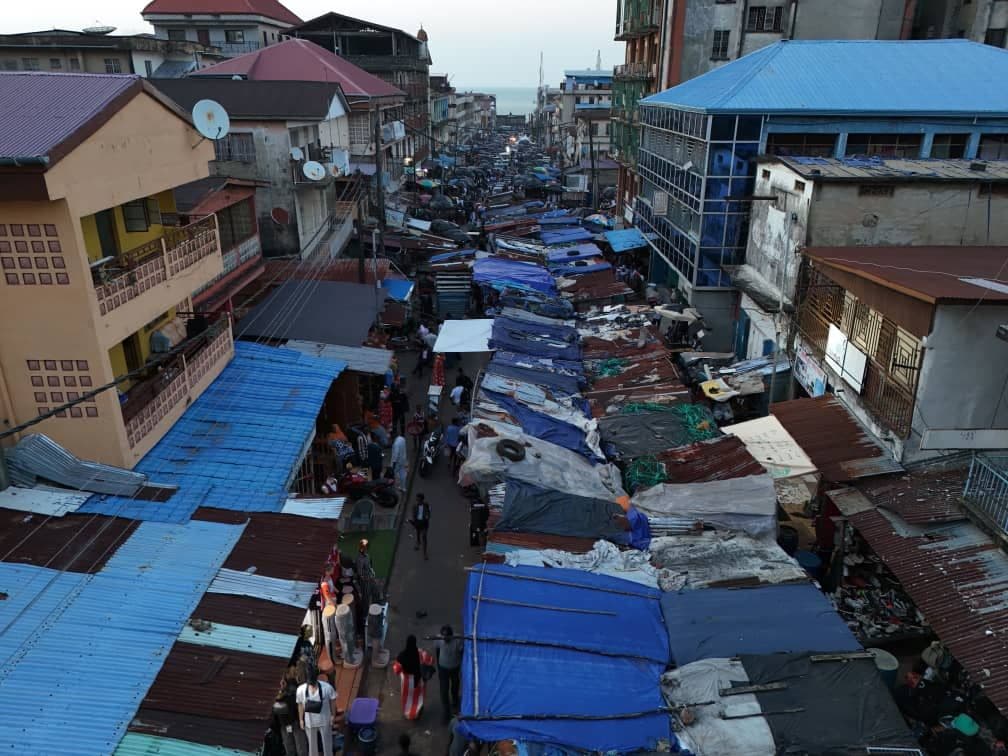
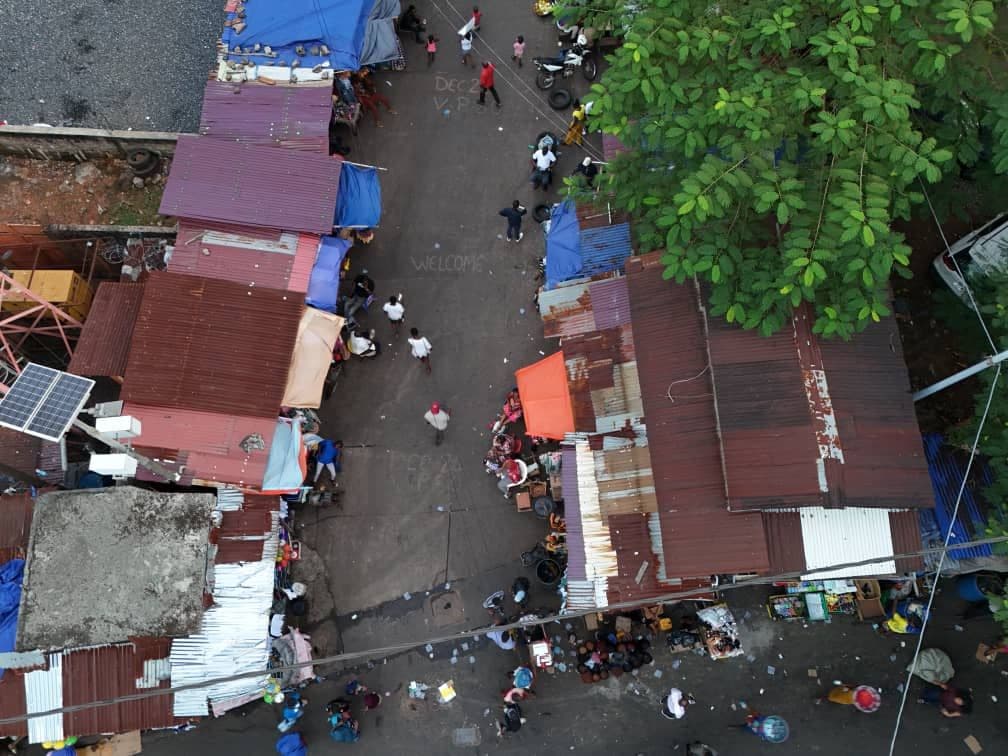
Climate-resilient redesign of a busy market street in the heart of Freetown Central Business District.
The Site
The Howe Street Market Corridor is a dense commercial street in the heart of Freetown's Central Business District. It is made up of two connected market streets: the continuation of Howe Street beyond the Garrison Street crossing (about 75 m) and the Rawdon Street extension to Regent Road (about 92 m), right next to the new Sewa Grounds Market. Rows of market stalls line the streets, with dozens of daily traders selling stationery, traditional and local dress, and street food, and about 1,000 people passing through every day on foot, by tricycle, taxi and minibus.
The street is almost entirely paved, with little tree cover and only partial shade from the stalls, so it turns into a heat trap in dry spells. In heavy downpours, surface water collects around the stalls and the limited drainage is overwhelmed, flooding stalls and damaging merchandise. Crowds, parked motorbikes and vehicles share the space, so moving around safely is hardest when the street is wet or very hot.
The Brief
Teams are asked to design an integrated improvement of the market corridor that works with the traders in place, without clearing the street. Proposals should deliver shade and heat protection, reliable drainage and flood resilience, while keeping safe, continuous pedestrian routes and access to surrounding businesses.
Designs may combine climate-resilient stalls with green cooling canopies, urban greening, permeable paving and sustainable drainage. Solutions should be quick to build from local materials, and should build on and complement the City's Climate Action Plan and Heat Action Plan.
More information is available in the Site Brief, and relevant documentation will be published in the Dataroom.
Questions?
If you have a question or would like more details on this site, use the form. Your message goes directly to the Freetown site team; you will receive a response via email.