
Church Square Precinct
Tshwane, South Africa
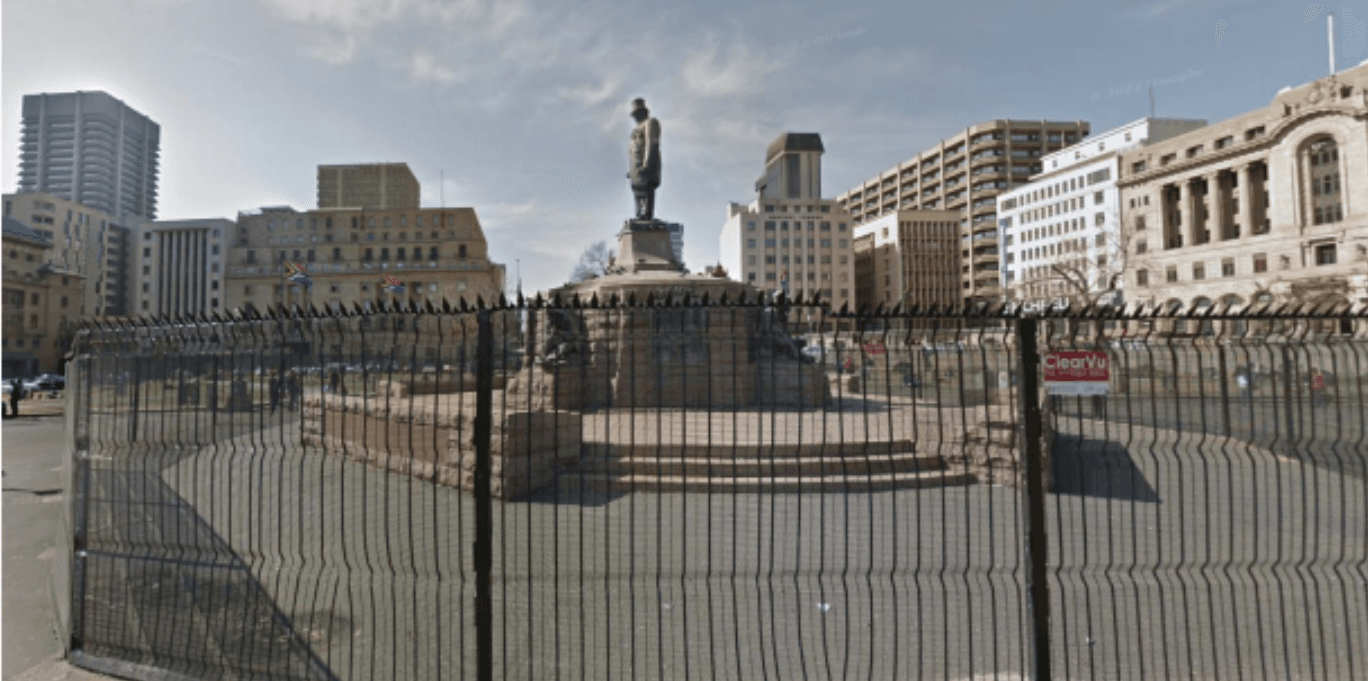
Church Square, located in Tshwane Inner City, is a charming open space surrounded by notable buildings and monuments. It is one of the most significant historical sites in the City of Tshwane.
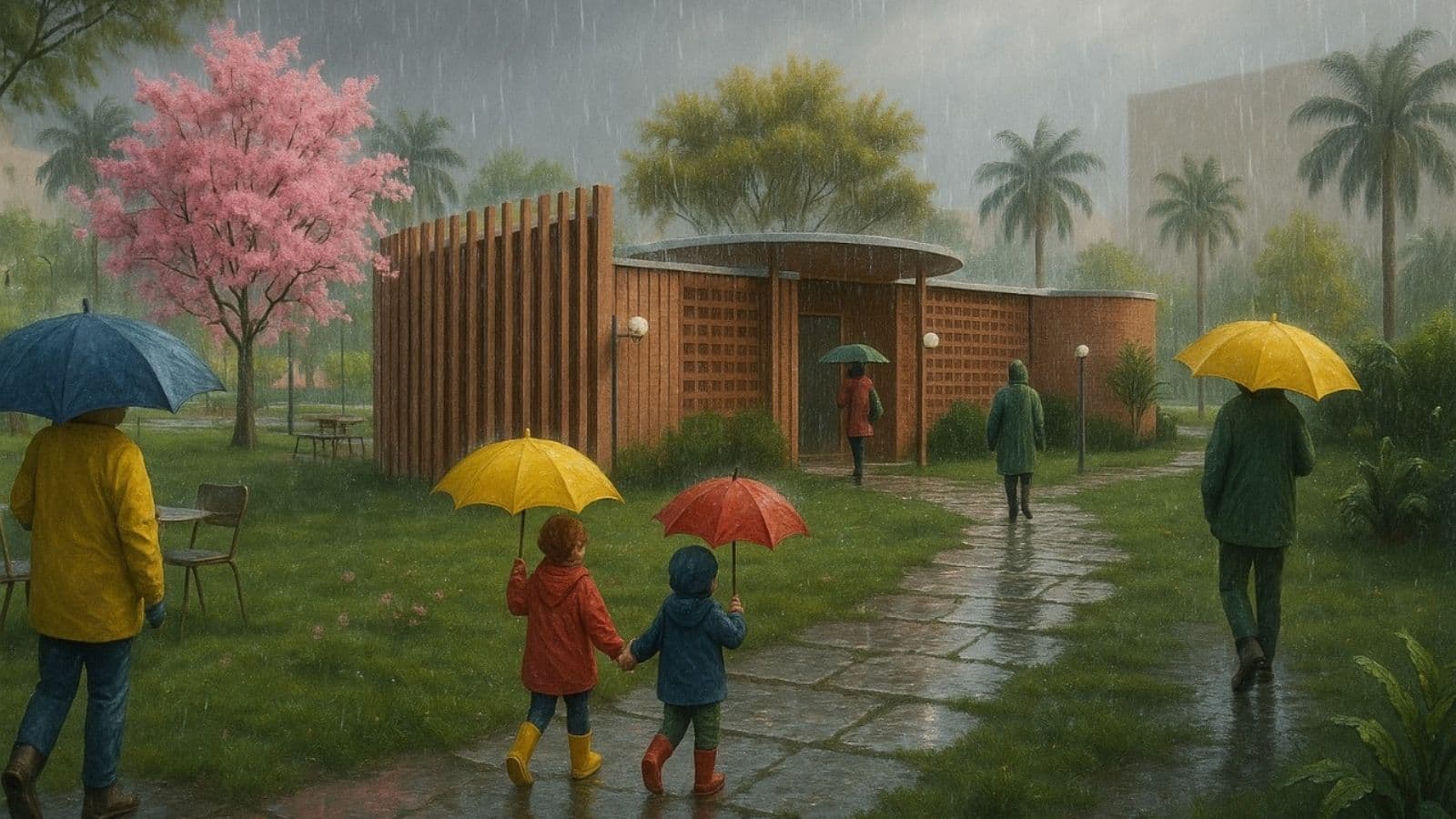
The Desea Architecture team developed a proposal to advance sustainable urban development in Tshwane, focusing on improving quality of life while reducing the city’s carbon footprint. Their design integrates public green spaces, efficient public transport, and other sustainability measures to create a more resilient, inclusive, and environmentally responsible neighbourhood.
The project demonstrates the value of interdisciplinary collaboration and integrated solutions, addressing both social and environmental aspects of urban development. By combining innovation with practical feasibility, the design provides scalable approaches that enhance urban livability and environmental performance. Desea Architecture’s proposal highlights how youth-led initiatives can contribute meaningful, implementable solutions to the challenges of contemporary city-making.

"Winning this competition is a great achievement for our team and a validation of our hard work and dedication.”
Congratulations to all teams that participated! Check out the documentation tab to view the winning team's proposal.
Special mention, Second Place | FutureScape, National Research University Higher School of Economics (HSE)
Team members: Andrey Aleksandrov, Teresa Zuech, Dmitriy Matveev, Alena Kirsanova, Ural Abdrakhimov, Viacheslav Samuleev, Grigoriy Atamanov, Daniil Smyshlyaev, Anna Sokolova, Ilya Andreev
Advisor: Kirill Puzanov, Associate Professor at the Faculty of Urban and Regional Development / Vysokovsky, Graduate School of Urbanism
Presentation of the site
Established in 1855, Church Square was selected as a place to erect a church between the city of Rustenburg in the west and Lydenburg in the east; it became the anchor of what was later to develop into the town of Pretoria. A little over 150 years later, Pretoria expanded into what is now known as the City of Tshwane. At 298 km, Tshwane is the 3rd largest municipality in the world (in terms of size). Apart from churches, various monuments were built and demolished until the site eventually became an open space with no defined infrastructure. It also lost its religious significance.
Today, Church Square is home to historically and architecturally significant buildings which are primarily occupied by various government functions. This includes the Palace of Justice, the Old Capitol Theatre, the Tudor Chambers, the Ou Raadsaal (Old Council Chamber) and the General Post Office, which are primarily occupied by various government functions. The square has fully pedestrianised access, with parking on the periphery and a thoroughfare for the Bus Rapid Transit (BRT) system known as A Re Yeng.
Church Square is a worthy destination both for residents of and visitors to the City. Optimal accessibility and the experience one has as they access Church Square is worth investing in. As such, the focus ‘area’ of this exercise is the streets that give access to Church Square.
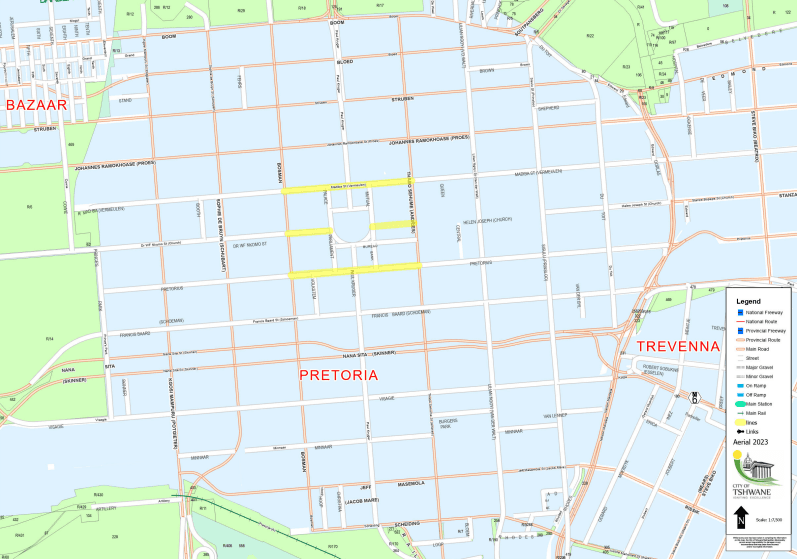
Key Information:
- Primarily surrounded by government offices, the site is a hive of activity during work hours.
- Young people and students use the space as a space to move through to their next destination. On occasion, tourists can also be found exploring the square.
Priority areas & main expectations:
Improve access to Church Square and the area’s image by:
- Enhancing pedestrianisation.
- Cycle routes and/or solutions to provide overall movement and connectivity.
- Considerations around safety
- Beautification that is inclusive of landscaping and greening.
- Social spaces for the multitudes of inner-city workers.
- Climate consideration, specifically around the urban heat island effect and reduced emissions.