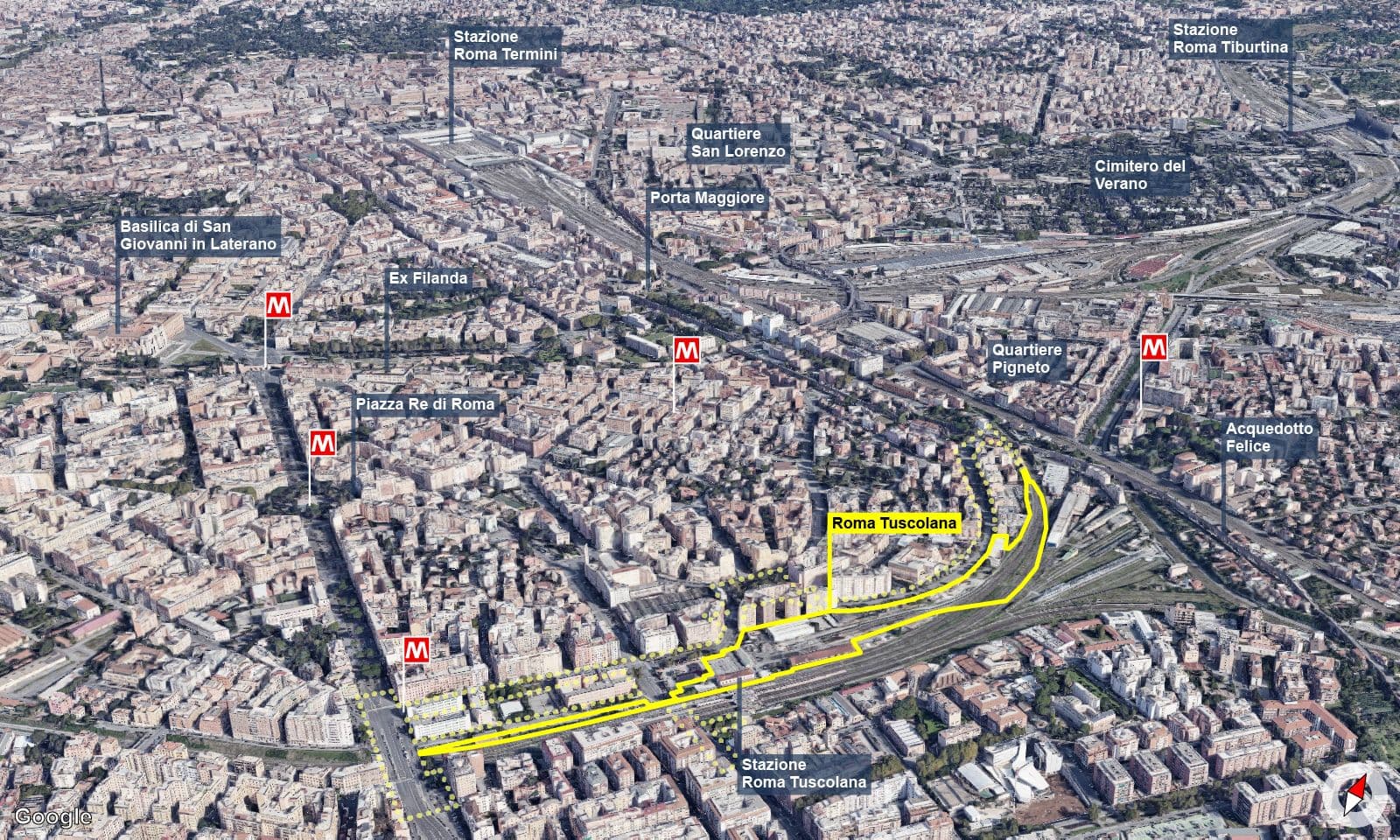
Roma Tuscolana
Rome, Italy
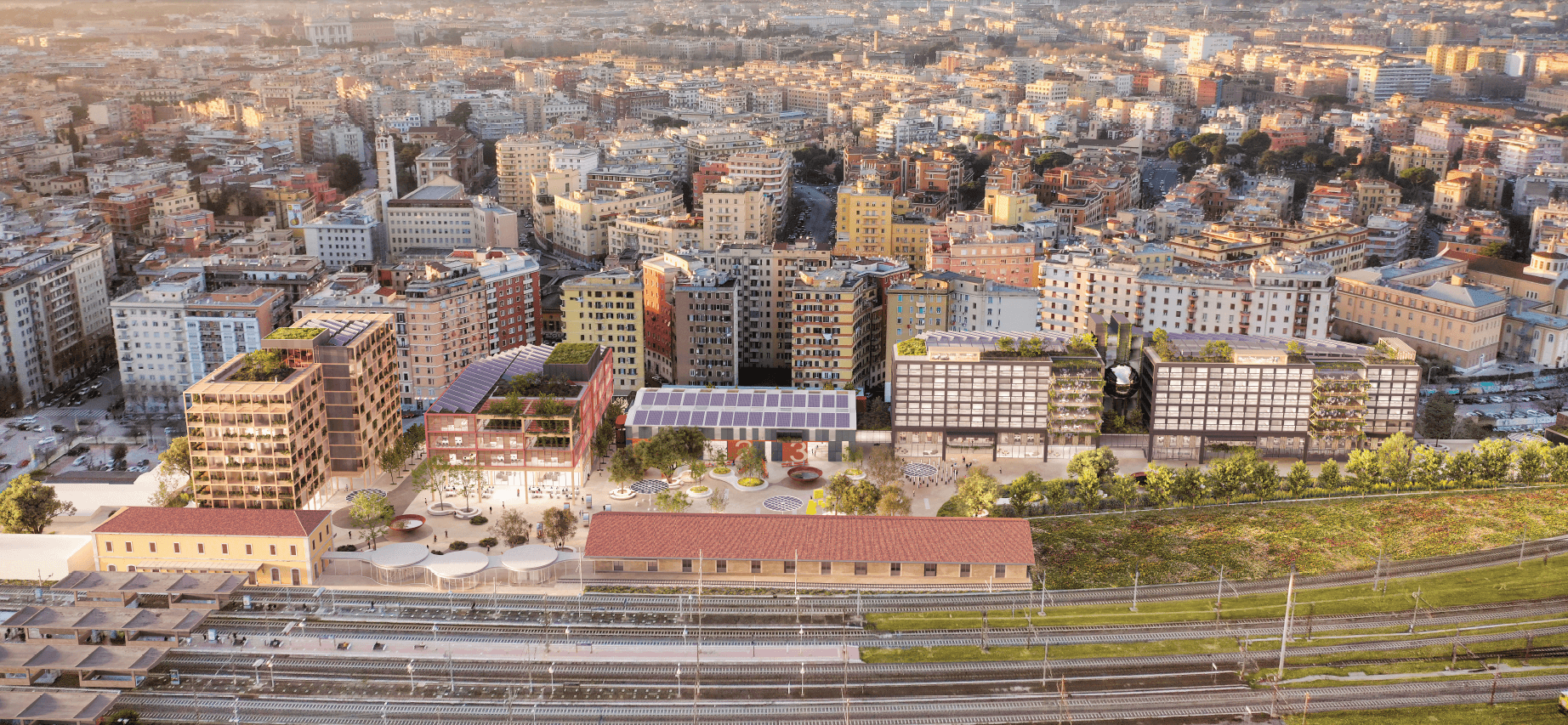
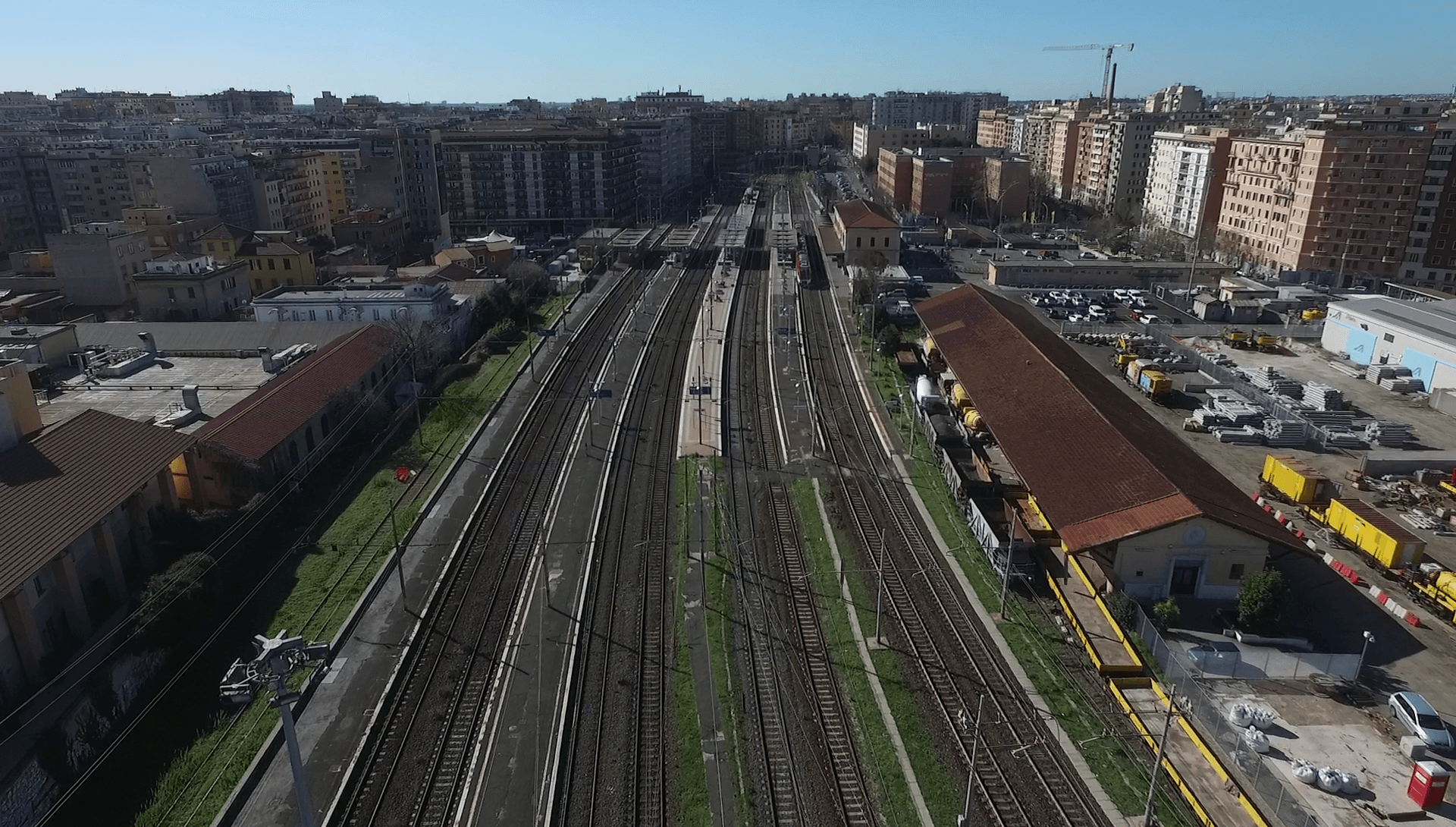
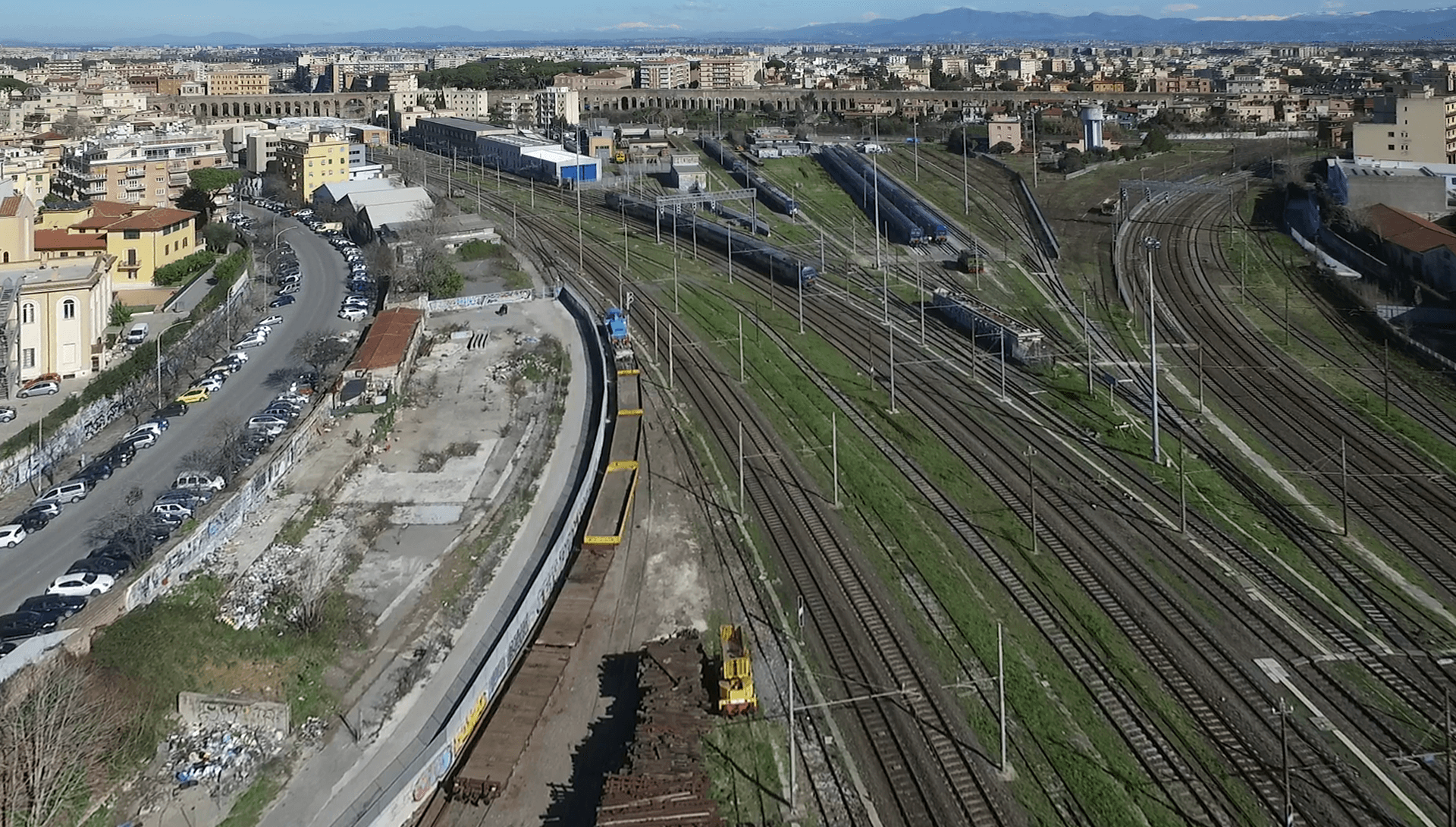
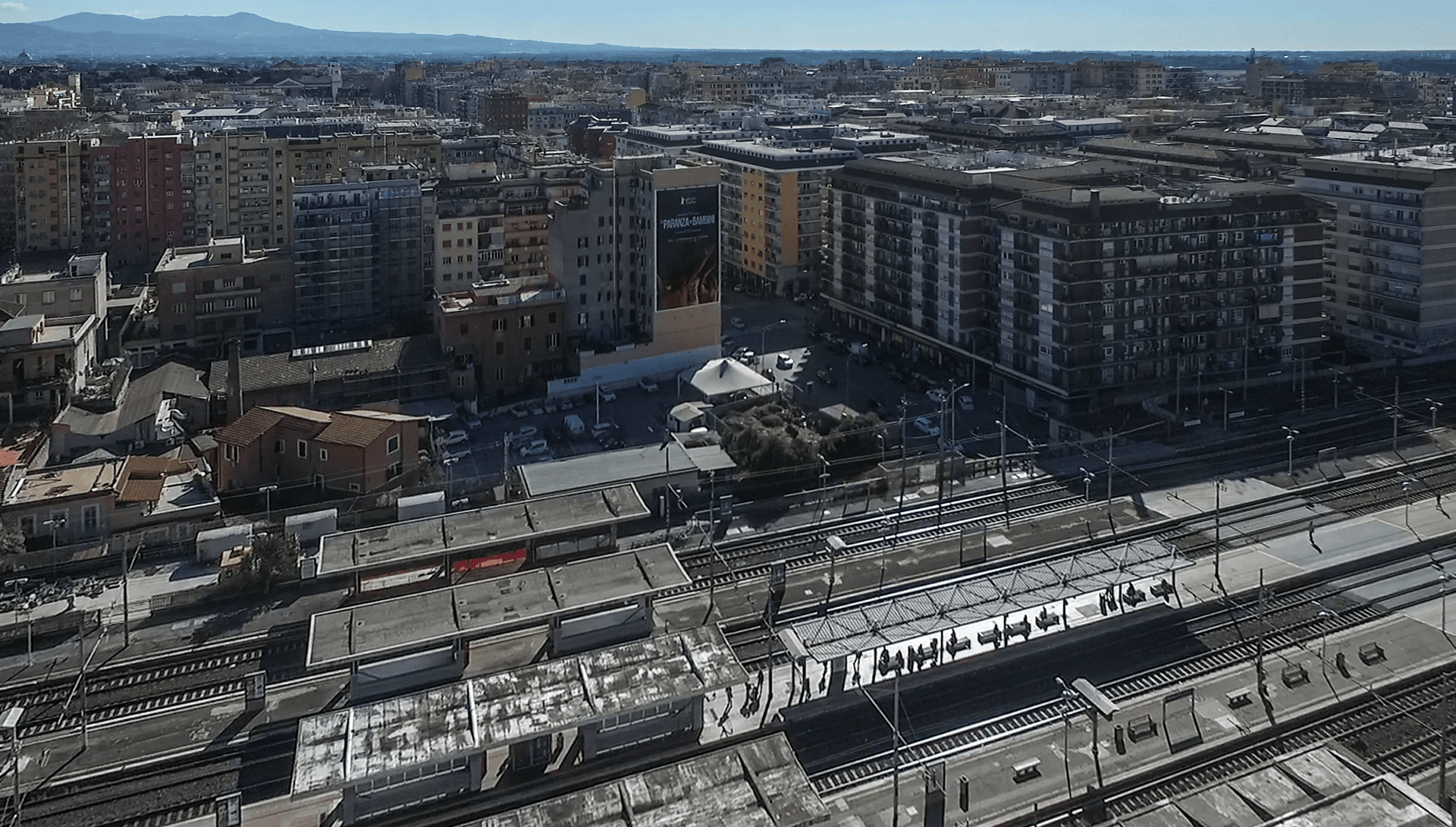
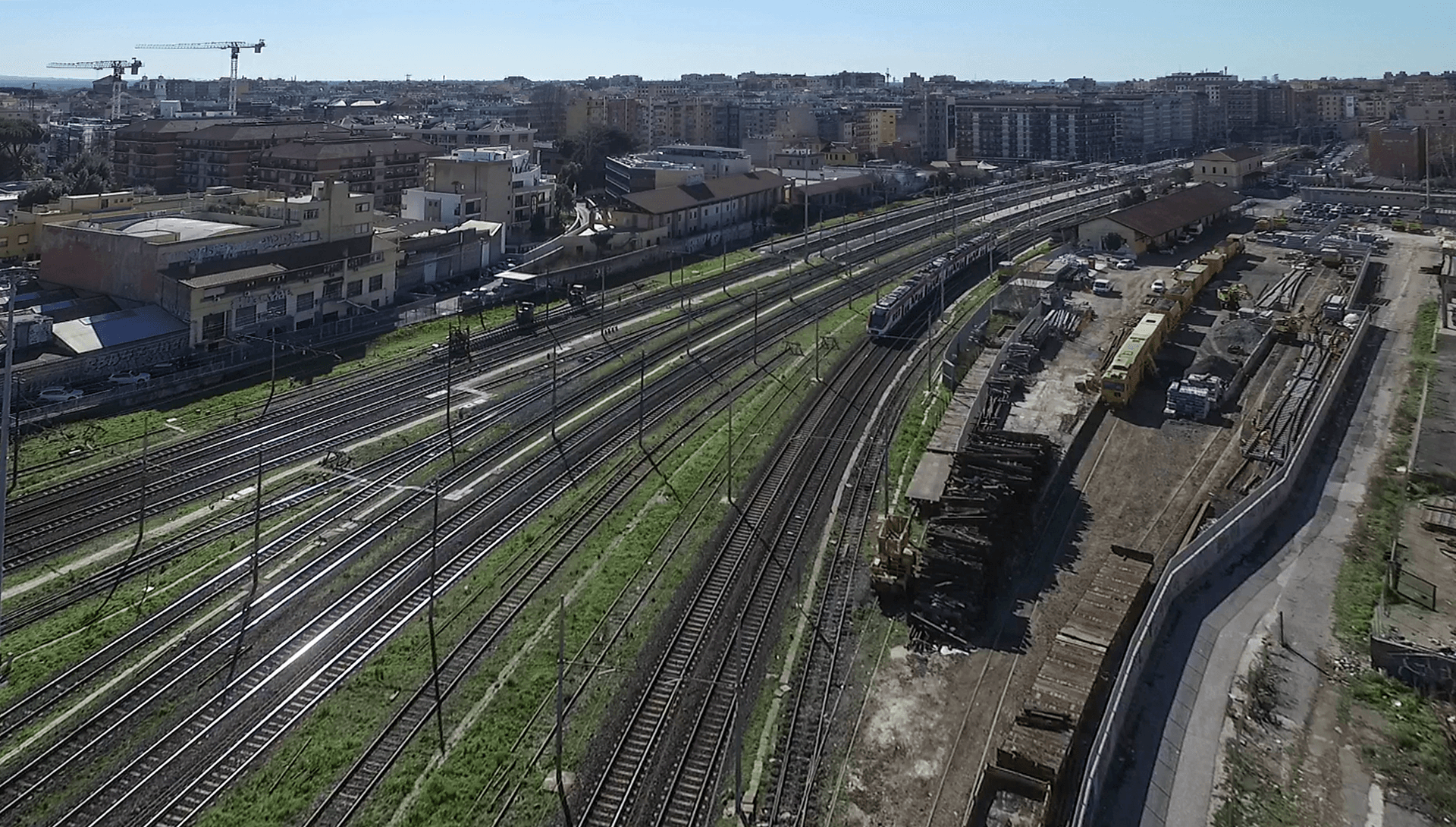
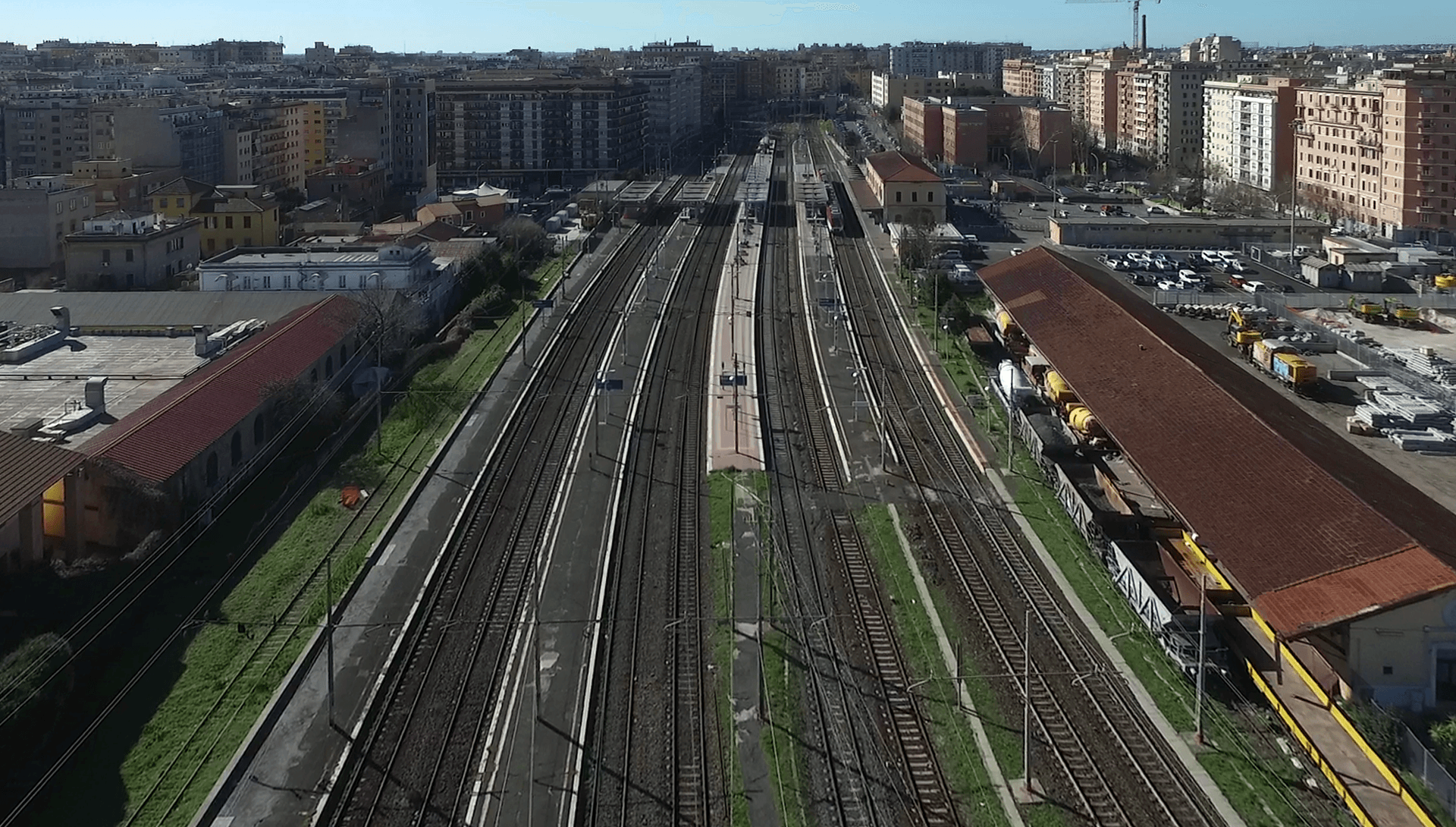
Project update: The ‘Campo Urbano’ project could not be implemented, following the requirements of the Superintendency as per the decree of restriction to the end of 2022, requirements that were made public only after the competition had started. However, participation in Reinventing Cities made it possible to bring to the attention of the operators the opportunity to regenerate the Tuscolana areas, thus giving a further boost to the recovery of the site.
The Winning Project
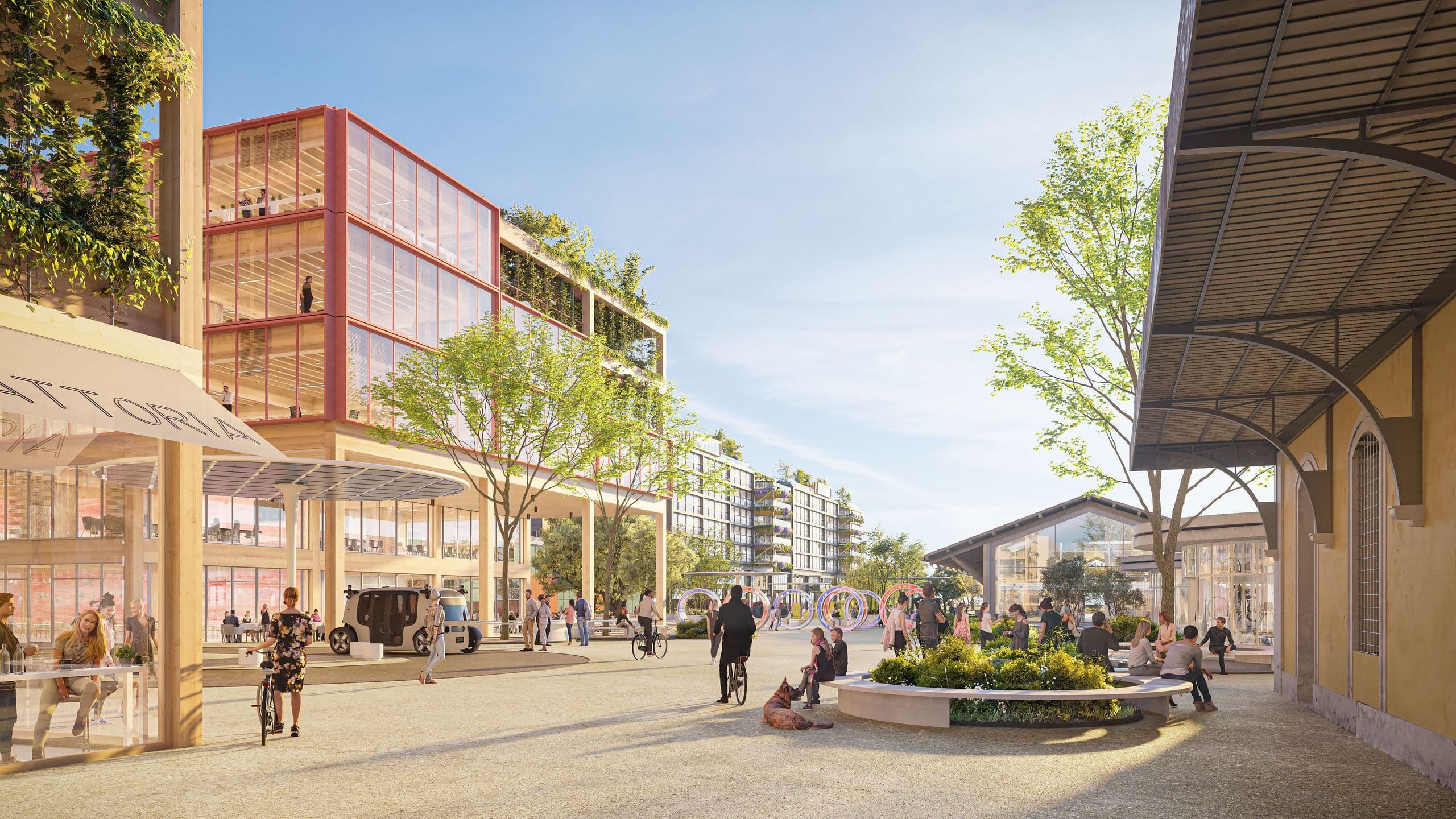
A campus, not a business park. This is the concept proposal designed by FRESIA for the development of the Rome Tuscolana site: an urban car-free realm embedded in a consolidated residential and industrial district. Education, professional development and culture to leverage urban regeneration. A truly mixed-use development with residences, offices, flexible spaces, a student hotel, an energy centre and retail, that promotes the 15-minute city and integrated mobility.
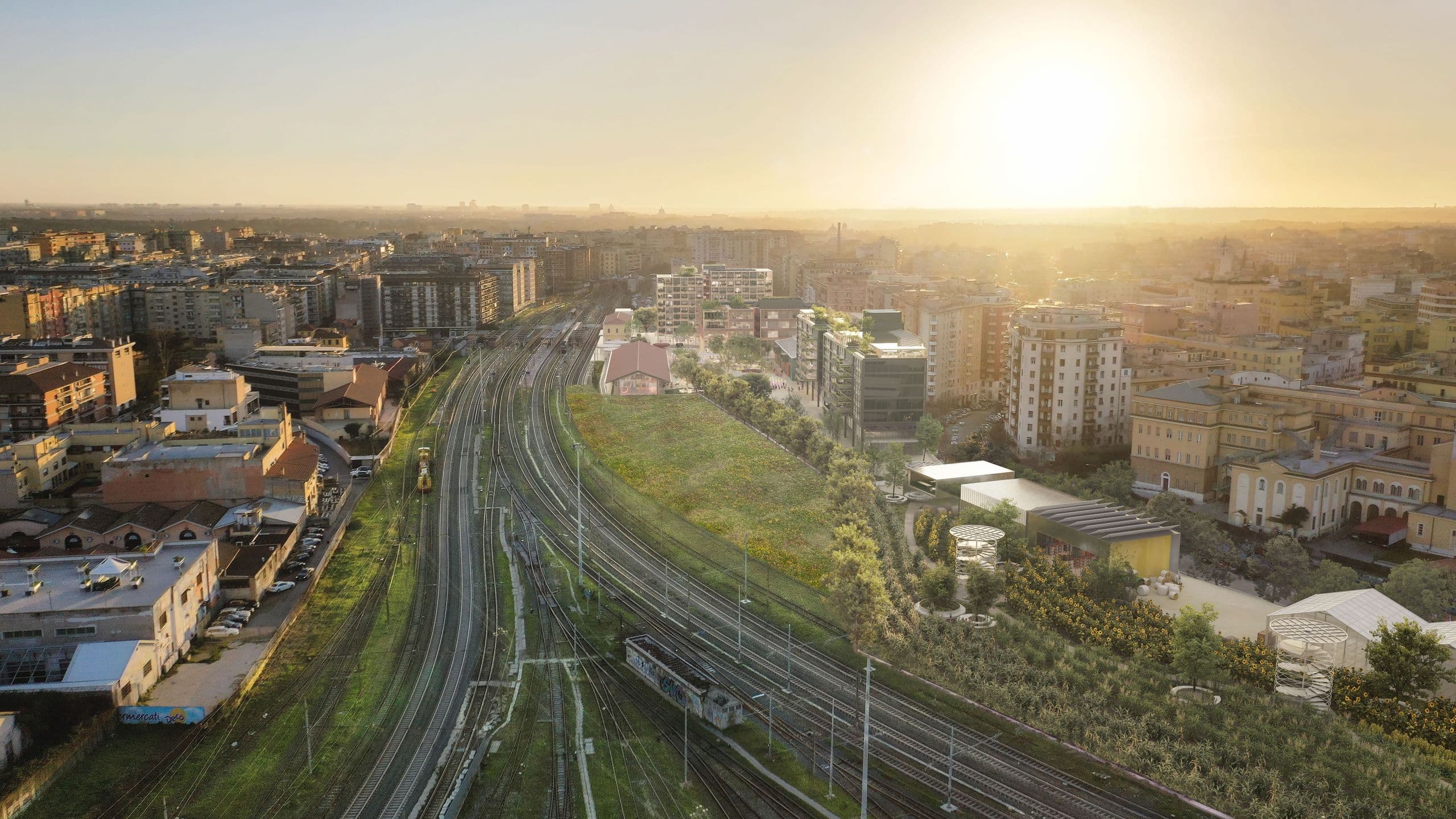
Campo Urbano is a possible vision for a neighbourhood seeking a new identity through the reconversion of the railway system, betting on circular economy, sustainability and the renovation of existing structures. A “fertile field” for construction industrialization, but firstly a place for urban integration, services and creativity.
The masterplan is strongly focused on the wide ground floor plate, where public spaces interact with private ones with synergy and vitality. Another key theme is the project’s green landscape as infrastructure providing renewable energy to the 5-hectare site area, which will see the rise of a LEED for Neighborhood Development certified masterplan.
Key components and solutions
- Conversion of a 5ha former railway yard into a car free, mixed use area following the “15-minute city” model.
- Promotion of green transport (cycling and walking) and sustainable lifestyle practices through the use of energy, water and waste management systems for residents and commuters.
- Renovation of existing buildings, construction of new modular and wooden structures with the goal of minimizing carbon impact by 85% whilst at the same time adhering to the LEED standard for Neighborhood Development. Approximately 133,000 tCO2eq are saved during the construction and operational phases.
- Development of an energy district center with the aim to run on 100% renewable energy by 2025 and ultimately reach zero-carbon by 2050.
- The project induces an ecological system for managing 100% of generated waste. This is achieved by means of biomass gasification, composting and recycling of materials.
- Tree canopy area increases by 90%, whilst 40% of the total soil displaced during construction will be reclaimed thereby increasing potential for plant biodiversity development.
Presentation of the site
The urban regeneration program of Roma Tuscolana, launched by Roma Capitale and FS Sistemi Urbani, aims at implementing several major changes in the area to improve the livability of places by reducing motor traffic, by promoting a sustainable mobility network – in line with the city mobility plan – and by introducing new services and attractions for residents. This program also includes the infrastructures of the metro-railway exchange junction and their integration with the equipped green mobility network.
The site regeneration is one of the priority objectives defined under the Memorandum of Understanding ratified by Roma Capitale, RFI and FS Sistemi Urbani, for the enhancement of the railway infrastructures and the regeneration of disused railway areas. It is also part of the “Green Ring”, a continuous set of public spaces and city services running along the railway ring between Trastevere and Tiburtina stations.